

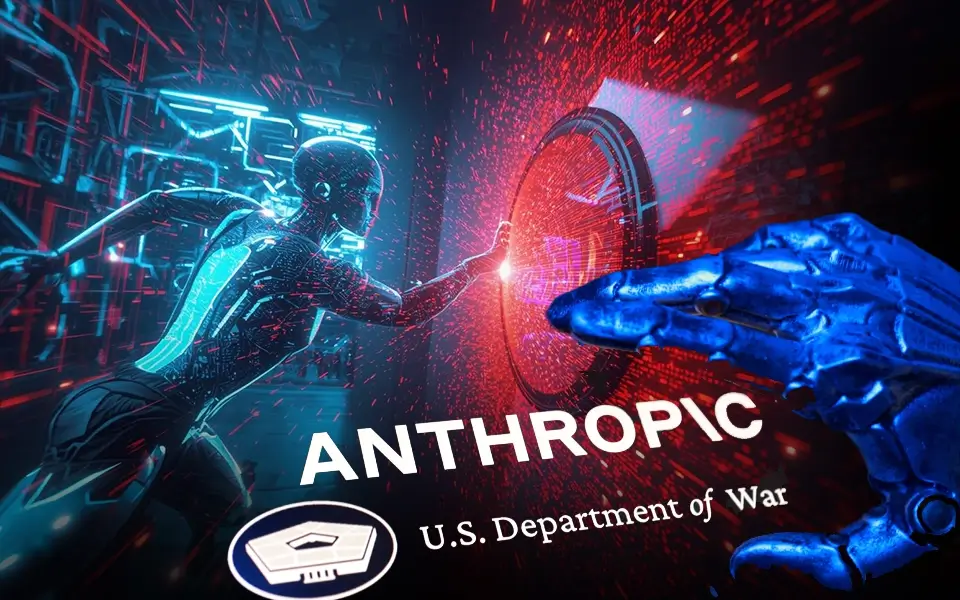
Anthropic has filed a lawsuit against the United States Department of Defense after the Pentagon designated the firm a national security “supply-chain risk,” a label that effectively blocks defense contractors from working with the company.
The dispute centers on Anthropic’s refusal to loosen restrictions on how its AI model, Claude (language model), can be used by the U.S. military. The company says it will not allow the technology to be deployed for mass domestic surveillance or fully autonomous weapons.
The Pentagon’s move threatens existing government relationships and could force federal agencies to phase out Anthropic’s technology. The lawsuit raises broader questions about how much control AI developers can maintain over how governments use their systems.
What Happened?
The company maintains AI safety procedures through which its systems operate because the model protection mechanisms serve as operational security measures against both public surveillance and autonomous weapon systems.
The Pentagon designated the company as a supply-chain threat after both parties failed to reach an agreement. The designation applies to organizations that maintain ties with foreign enemies or pose a danger to national security. The dispute escalated after the Defense Department formally notified Anthropic of its designation as a supply-chain risk, according to an unclassified letter from the department outlining the decision.
The federal government ordered all agencies to stop using Anthropic technology, which made the dispute escalate into a more serious conflict. The lawsuits state that government actions in this case broke the law while they infringed upon the company’s constitutional rights, which include free speech and due process protections.
Anthropic has expressed its willingness to assist national security operations, while the company prohibits unsafe applications of its technology. They filed a lawsuit challenging the Pentagon’s decision to classify the company as a supply-chain risk, arguing the move was unlawful and violated constitutional protections outlined in the court filing.
Why This Matters?
The case shows how governments and AI companies are competing over control of advanced technologies, which both sides believe should be used according to their own standards.
Defense, intelligence, and cybersecurity operations increasingly use artificial intelligence systems, which include Claude as their core technology. The U.S. military has already implemented commercial AI systems to perform multiple tasks, which include analyzing large datasets and supporting operational planning.
Technology companies have established restrictions on specific uses of their products since AI capabilities have experienced significant growth. The majority of organizations, including Anthropic, aim to stop their systems from being utilized in autonomous weapon systems and public surveillance operations that target large groups of people.
That stance can conflict with government priorities. Defense officials have argued that AI tools must be available for a wide range of national security purposes, especially as geopolitical competition around AI intensifies.
The Anthropic lawsuit, therefore, touches on a broader policy question: whether governments purchasing advanced AI systems can demand unrestricted use, or whether companies can enforce ethical constraints even after selling or licensing their technology.
Industry analysts say the outcome could influence how future defense contracts are structured. If the government succeeds in forcing AI companies to remove safeguards, it could reshape how technology providers approach military partnerships.
Who Is Affected?
The dispute is not limited to one company or one defense contract. It raises broader questions for technology firms, government buyers, and the developers building advanced AI systems.
Businesses
The case could reshape relationships between the U.S. government and private AI developers.
Anthropic has previously worked with defense and intelligence agencies, including through partnerships that allowed its models to run in classified environments.
If the Pentagon’s designation remains in place, companies working on defense contracts may be forced to avoid Anthropic’s technology entirely. That could shift business opportunities toward rival AI developers willing to accept broader usage terms.
Consumers
For the public, the dispute is part of a larger debate about the role of artificial intelligence in government operations.
Anthropic’s restrictions focus specifically on preventing mass surveillance of citizens and autonomous weapons systems. The lawsuit effectively asks courts to weigh how much influence private companies should have over the ethical use of their technology.
Although the case centers on defense policy, its outcome could shape how AI is deployed in areas like policing, intelligence gathering, and public services.
Developers
AI researchers and developers are watching the case closely because it could influence how AI systems are built and licensed.
If governments gain greater authority to dictate how models are used, companies may face pressure to design fewer restrictions into their systems. Conversely, a ruling in favor of Anthropic could reinforce the idea that developers retain control over how their technology is deployed.
Several AI researchers have already expressed concern that aggressive government intervention could discourage open discussion about AI safety and ethical limits.
What Happens Next?
The lawsuits will move through federal courts in Washington and California, where judges will consider whether the Pentagon’s designation is lawful.
In the meantime, federal agencies have begun reviewing their use of Anthropic’s systems as part of the phase-out directive. Contractors working with the Defense Department may also need to adjust their technology stacks to comply with the order.
The Pentagon has not publicly responded in detail to the allegations made in the lawsuit.
Legal experts expect the case to take months or longer to resolve, and it could ultimately test the limits of federal authority over private technology firms providing AI services to the government.
Editorial Close
The clash between Anthropic and the Pentagon illustrates how quickly artificial intelligence has moved from a research tool to a strategic technology.
As governments integrate AI into national security operations, the balance between innovation, safety rules, and state authority is becoming harder to maintain. The outcome of this legal battle could influence not just one company’s future contracts, but the broader relationship between AI developers and governments deploying their systems.









Leave a comment