

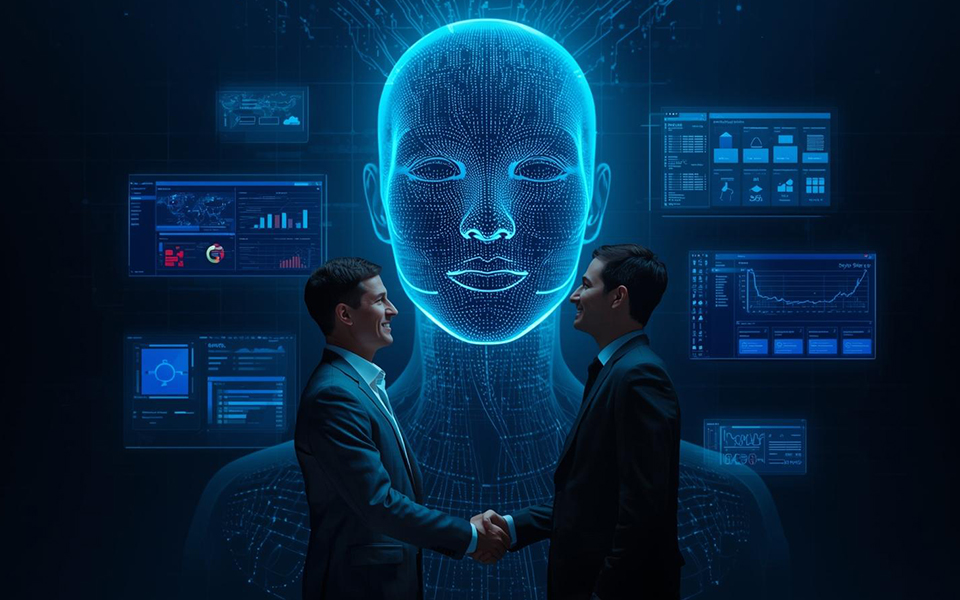
Anthropic has acquired AI startup Vercept in a move aimed at strengthening Claude’s ability to operate software directly on computers. The deal signals a push beyond text generation toward systems that can take action across digital environments.
Vercept has been developing agent-style AI tools designed to interact with interfaces much like a human user would. The acquisition comes as competition intensifies among AI developers racing to build more capable assistants.
For businesses, developers, and everyday users, it marks another step toward AI systems that can move from answering questions to performing tasks.
Building Toward Action-Oriented AI
Anthropic announced that it has acquired Vercept, a startup focused on training AI systems to interact with computer interfaces autonomously. Vercept has developed agent-based systems capable of navigating applications, clicking through menus, entering data, and executing workflows across various digital tools.
The Vercept team, including co-founders Kiana Ehsani, Luca Weihs, and Ross Girshick, has spent years studying how AI systems can observe and act within the same software environments people use every day. Their work centers on enabling models not just to understand interfaces, but to operate them reliably.
Rather than generating text alone, Vercept’s models were designed to observe screens and take structured actions within them.
The technology aligns closely with Anthropic’s efforts to expand Claude’s “computer use” functionality. Claude has increasingly been positioned not only as a conversational assistant but as a system that can execute real-world digital tasks. By bringing Vercept’s team and research in-house, Anthropic aims to accelerate that development.
The acquisition also reflects a broader shift within the AI sector. Major labs are investing heavily in agentic systems, AI that can plan, reason, and act across software environments.
Rival companies have introduced features that allow models to browse websites, interact with documents, and automate repetitive workflows. The competition has moved beyond chat interfaces toward systems that can complete multi-step assignments independently. Anthropic’s latest move suggests it sees this transition as central to the next phase of AI deployment.
Why the Shift Toward AI Agents Matters
The AI industry is entering a new phase. The focus is no longer limited to answering prompts. The goal is to enable models to perform tasks inside digital ecosystems.
This shift carries implications for how work gets done. Many professional tasks involve moving between apps, copying information, filling out forms, or updating records. Automating those steps can reduce friction and save time.
Agent-style systems are designed to bridge that gap. Instead of responding with instructions, they execute those instructions themselves.
This is where computer utilization becomes critical. AI systems must reliably interact with complex interfaces, handle errors, and maintain context across sessions. That requires advances in training, safety controls, and system design. For Anthropic, strengthening Claude’s ability to operate software directly enhances its competitive position.
Companies such as OpenAI, Google, and others are also investing in similar capabilities. Each aims to build assistants that can integrate into daily workflows rather than sit alongside them. The difference lies in reliability and safety. Systems that act autonomously must avoid mistakes, respect permissions, and operate within defined boundaries.
Anthropic has emphasized safety in its product development. Integrating Vercept’s research could allow the company to expand functionality while maintaining tighter control over how actions are executed. In practical terms, this is about moving from advice to execution. That change has strategic weight across industries.
Where the Effects Will Be Felt
The effects of this acquisition will reach beyond AI researchers. Businesses, developers, and everyday users could see changes in how digital tasks are handled. As AI systems move closer to direct action, different groups will experience the shift in distinct ways.
A. Enterprises and Corporate Workflows
Enterprises are likely to watch closely. Many organizations are exploring AI to automate repetitive workflows and internal processes. Tools that can interact with dashboards, spreadsheets, and enterprise platforms may streamline operations.
Systems capable of navigating Software used in computers without custom integrations could reduce development overhead. For companies, the appeal lies in lowering manual workload while preserving oversight.
B. The Builder and Engineering Community
Developers will see new possibilities and new challenges. Agent-based AI requires frameworks that allow safe interaction with applications. That includes permissions, sandboxing, and logging.
There is also demand for better APIs and development tools to coordinate multi-step actions. As Claude’s capabilities expand, developers may integrate it into automation pipelines or build new applications around its abilities.
However, ensuring predictable computer usage remains essential. Developers will need clarity around performance limits and safety safeguards.
C. Everyday Users and Digital Productivity
For individual users, the change may appear gradual. AI assistants that can book appointments, organize files, or update documents could simplify everyday digital tasks.
The experience could shift from asking how to complete a task to having the system complete it. Trust will play a central role. Users must feel confident that actions are accurate and reversible. As these tools mature, they may become embedded in personal productivity workflows.
Integration and Strategic Direction
Anthropic has indicated that Vercept’s team will join its research and product efforts. The immediate focus is likely integration of agent-based research into Claude’s existing architecture. That includes refining how the model observes interfaces and executes commands.
Short-term changes may involve incremental feature updates rather than sweeping redesigns. The broader strategy appears clear: deepen Claude’s operational capabilities while preserving safety standards.
Open questions remain about deployment scale. Will these features be limited to enterprise customers at first? How will permission management be handled across different platforms?
Anthropic has not outlined a full rollout timeline. What is clear is that the acquisition reflects long-term positioning rather than a quick product patch. Bringing in a specialized team allows Anthropic to build these capabilities internally rather than rely solely on partnerships.
The Next Phase of AI Systems
The acquisition underscores a broader pattern in artificial intelligence development. The first wave of generative AI centered on conversation and content creation. The next wave is about execution.
Companies are investing in models that move through digital environments, interact with tools, and complete structured workflows. This transition raises technical and operational questions.
AI systems must handle ambiguity, adapt to changing interfaces, and operate within secure boundaries. That complexity distinguishes agent-based AI from traditional automation scripts. For the industry, the shift represents an evolution in expectations.
Users increasingly want systems that do more than respond. They want systems that act. Anthropic’s purchase of Vercept fits into that larger narrative. It reflects the race to build AI that integrates seamlessly into everyday digital tasks.
The competitive landscape is intensifying. As companies refine these capabilities, differentiation will likely depend on reliability, safety, and ease of integration. The announcement does not transform the market overnight.
But it highlights where the market is headed. AI is moving from conversation to operation. And acquisitions like this suggest that the tools of tomorrow will be measured not only by what they say, but by what they can do.










Leave a comment