

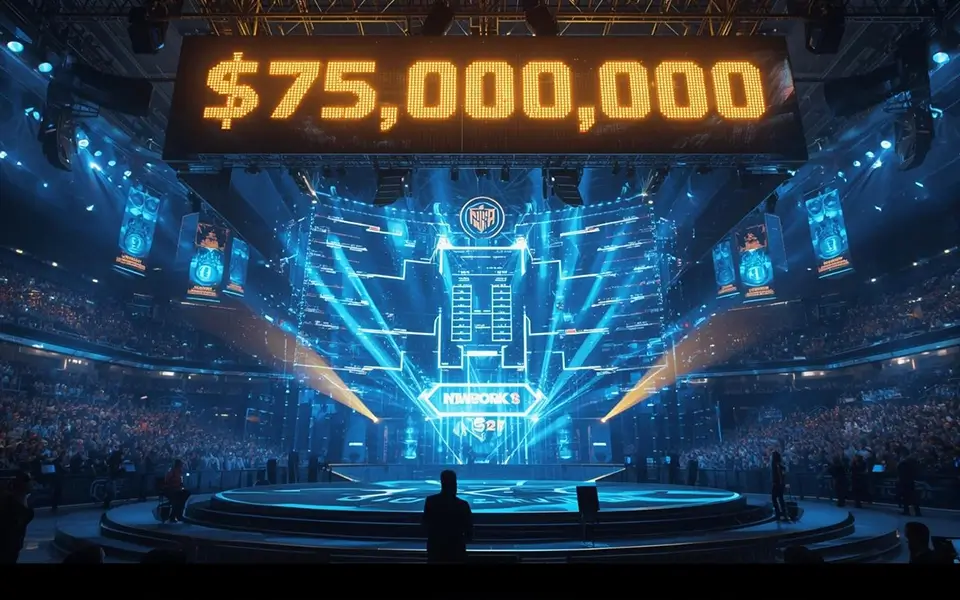
The Esports World Cup Foundation announced a record $75 million total prize pool for the Esports World Cup 2026, confirming the full lineup of competitive games and a seven-week schedule for this summer’s event in Riyadh, Saudi Arabia. The event, billed by organisers as the largest esports competition in history, will run from July 6 to August 23 and feature players and clubs from around the world.
Organisers said more than 2,000 players representing over 200 clubs from more than 100 countries are expected to compete in 25 tournaments across 24 game titles. The format spans multiple genres, from first-person shooters to strategy and racing titles, and crowns an overall Esports World Cup Club Champion.
This year’s announcement matters as global esports continues to expand in scale and economic significance. With prize money rising from previous editions, the EWC highlights the growing commercial and cultural footprint of competitive gaming.
What Esports World Cup 2026 Announced and How It Works
The Esports World Cup Foundation (EWCF) laid out the full prize pool, detailed schedule, and complete roster of games for 2026. The total prize money is set at $75 million, up from approximately $70 million in prior years, distributed across club and individual championships.
The headline portion of the pool is the Club Championship, which will award $30 million to the top 24 clubs, with the winning club receiving $7 million. Individual game championships collectively offer more than $39 million, with additional awards for MVPs and qualifiers.
Gameplay will be structured across 25 tournaments featuring 24 titles over seven weeks, with events running in parallel across multiple arenas in Riyadh. The aim is to test consistency and versatility, as clubs earn points and standings across different games rather than a single tournament bracket.
Scheduled titles include popular franchises such as VALORANT, Counter-Strike 2, Dota 2, League of Legends, Fortnite, and newly included racing title Trackmania, among others. Entry to some events will include qualification through regional circuits, publisher events, and open qualifiers.
Why This Has Become a Global Limelight
Esports has shifted from niche competitions to an increasingly professional global industry. Prize pools of this magnitude underscore the economic stakes at play for players, clubs, sponsors, and broadcasters. Competitive gaming events now attract millions of viewers and significant brand investment, putting pressure on organisers to scale offerings annually.
The rising prominence of multi-title events reflects broader market pressures. Traditional sports leagues have long seasons and structured championships. Esports counterparts are emerging with comprehensive calendars that demand coordination across games, platforms, and regions. The EWC’s cross-game Club Championship format responds to that trend by rewarding consistent performance over time rather than isolated wins.
Prize money growth also mirrors economic forces outside gaming. Sponsorship, media rights, and fan monetisation have all grown rapidly, pushing organisers to create events that can compete for global attention. Esports audiences are expanding across demographics, and larger purses help secure top talent and media deals.
The Ripple Effects Across the Industry/Ecosystem
The scale of the Esports World Cup 2026 extends beyond a single tournament. A prize pool of this size is likely to influence how companies invest, how platforms operate, and how audiences engage with competitive gaming. Its impact will be felt across multiple layers of the esports economy.
Impact on Businesses
Clubs and sponsors see larger prize pools as opportunities to expand operations. Higher revenue potential can attract investment and allow organisations to recruit players, coaches, and support staff. It can also influence how brands allocate marketing budgets, with some choosing esports partnerships over traditional sports.
For publishers and tournament partners, bigger events mean more visibility for their games. Developers whose titles are featured can expect increased engagement from competitive players and viewers, helping drive sales and retention.
Impact on Developers / Operators
Game developers and event operators must juggle technical and logistical challenges to support large, multi-venue competitions. They need to ensure fair play, stable infrastructure, and consistent rules across disparate game modes. This encourages investment in platform technology and regulatory oversight.
Operational complexity also rises as tournaments span seven weeks. Coordinating schedules, broadcasting, and data feeds from multiple arenas requires robust planning and cooperation between EWCF, team representatives, and broadcasters.
Impact on Consumers / Users
Fans who follow esports benefit from expanded access to competitive content. Seven weeks of tournaments mean more chances to watch favourite games and personalities, both in person and online. Events of this scale often draw significant viewership on streaming platforms.
Broader exposure also encourages grassroots engagement. Amateur players and local clubs may find clearer pathways to professional levels as qualifiers and regional events feed into global championships.
Why This Moment Matters for the Industry
This year’s EWC comes at a time when the global esports industry is seeking greater legitimacy and long-term stability. Organisers say the structure and prize pool growth reflect a push toward establishing firm foundations for competitive gaming rather than sporadic, one-off events.
Geopolitical context plays a role. Saudi Arabia has positioned Riyadh as a hub for major sporting and entertainment events. Hosting the EWC at this scale is part of broader efforts to diversify regional economies and attract global audiences.
The seven-week notice also allows teams and media partners to plan programming and travel well ahead of the summer season. It creates a predictable rhythm in a crowded global events calendar.
What the Industry Will Be Watching Next
Execution will be the first test. How smoothly the multi-title, multi-venue format runs will influence future editions and potentially the structure of other global esports events. Logistic challenges, spectator satisfaction, and broadcast quality will be in focus.
Another point of interest is regulation. As prize pools grow, governments and esports authorities may explore rules around player contracts, earnings reporting, and age limits. Policy discussions could shape how clubs and players engage with future competitions.
Competition from rival events will also matter. Other global tournaments may adjust dates or formats to avoid clashes or to attract elite players seeking maximum exposure and reward.
A Broader Signal for the Future of Esports
The scale of the 2026 World Cup signals that esports is no longer fringe entertainment. It sits alongside major sporting calendars and draws attention from investors traditionally focused on established sports.
Long-term implications include potential expansion to new cities and regions, more structured season formats, and deeper partnerships with broadcasters and tech platforms. The direction suggests esports will continue blending competitive intensity with commercial viability on a global scale.
Analysts say events like this pave the way for sustainable ecosystems where players can build careers and audiences can follow consistent seasons rather than isolated tournaments.











Leave a comment