

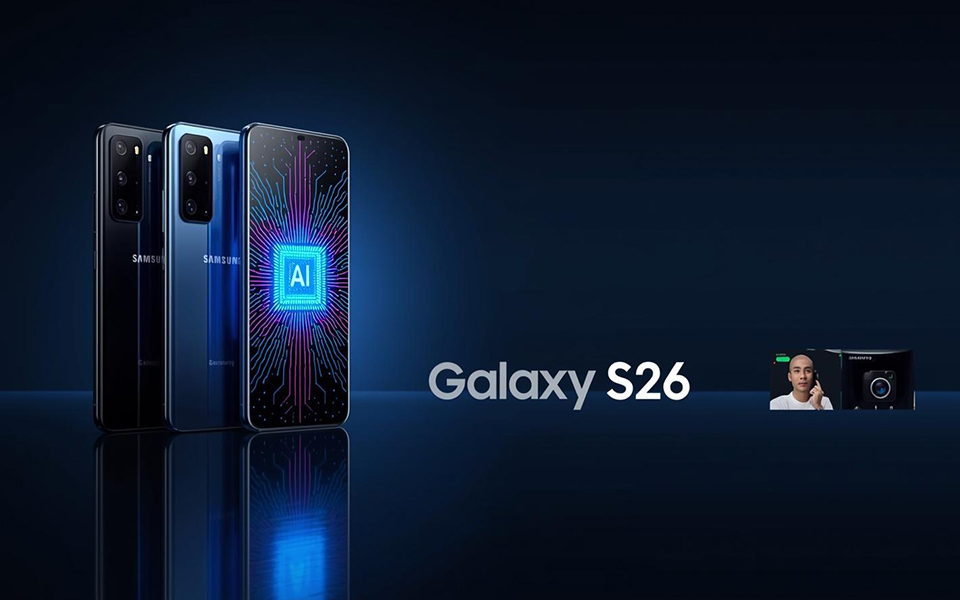
During the Galaxy Unpacked event, Samsung formally unveiled its newest flagship products, the Galaxy S26, S26+, S26 Ultra, and Galaxy Buds4, making artificial intelligence the center of the smartphone experience. Pre-orders for the Samsung Galaxy S26 series are open on February 25. The new devices will enable everyday communication to be quicker, more situational, and less manual.
Rather than deploying the artificial intelligence tools separately, the company is transforming the way in which smartphones predict user demands, marking the transition towards proactive mobile computing. “We believe AI should be something people can depend on every day, designed to work consistently for everyone and without the need for expertise,” said TM Roh, Chief Executive Officer, President, and Head of Device eXperience (DX) Division at Samsung Electronics.
The announcement is a sign to consumers, creators, and observers of the industry of a larger transformation in the relationship between reactive smartphone experiences and devices that are designed to act as intelligent assistants.
Power Under the Hood: A Performance Reset
Samsung focuses on meaningful performance gains that support always-on AI and sustained daily usage. The upgrades aim to make speed, efficiency, and thermal stability noticeable in real-world tasks rather than just benchmark numbers.
a. Processor & Performance
The Samsung Galaxy S26 series variant runs on the Snapdragon® 8 Elite Gen 5 Mobile Platform for Galaxy and Exynos 2600, marking a notable performance jump over previous generations.
Samsung reports a 19% increase in CPU performance, alongside a 24% GPU improvement. More significant is the 39% boost in the NPU, enabling always-on AI processing without heavily draining battery life.
In practice, this means faster on-device translations, smarter photo processing, and smoother multitasking that adapts to usage patterns.
Thermal management also sees attention through a redesigned vapor chamber cooling system. Sustained performance during gaming, video editing, or AI-driven tasks feels more stable, reducing slowdowns during long sessions.
b. Charging & Daily Endurance
Battery life improvements are paired with Super Fast Charging 3.0 support. The phone can reach roughly 75% charge in about 30 minutes under supported conditions.
For daily users, this translates less into headline speed and more into flexibility, quick top-ups before commuting or meetings become practical rather than planned.
A New Approach to Display Privacy
One of the more unusual additions is a built-in Privacy Display. Instead of relying on external filters, the screen uses pixel-level light control to limit viewing angles.
Users can adjust privacy modes depending on the environment, whether sitting on a train or working in a café. The feature works in both portrait and landscape orientation, making it useful for video viewing and document editing alike.
The approach reflects growing concern around screen visibility in public spaces, especially as phones handle more sensitive information.
a. Smarter Cameras, Creator-Ready Tools
The camera system evolves toward intelligent assistance, helping users capture and edit content with less effort. Improvements prioritize consistency, low-light performance, and simplified creative workflows for everyday creators.
b. Camera System Highlights
The camera system focuses less on megapixel competition and more on usability improvements.
Wider apertures allow better low-light capture, while enhanced Nightography Video improves clarity during nighttime recording. Super Steady mode now includes horizontal lock, helping stabilize footage while walking or filming moving subjects.
The device also introduces the APV codec, improving video efficiency without sacrificing detail, a feature aimed at creators managing large files.
AI-powered image signal processing enhances selfies by adjusting lighting and tone more naturally rather than aggressively smoothing faces.
The result feels tuned for both casual photography and content creation workflows.
c. AI Editing & Creation
Editing tools lean heavily on simplicity.
Photo Assist allows users to modify images using natural language instructions. Creative Studio expands editing options without requiring advanced software knowledge.
Document Scan converts captured pages into corrected PDFs automatically, removing distortion and aligning text for readability.
Instead of overwhelming users with options, the tools aim to reduce the steps between capture and sharing.
AI That Works Proactively
AI is positioned less as a feature and more as a background system guiding interactions.
Now Nudge surfaces timely suggestions based on context, while Now Brief compiles daily summaries that combine schedules, reminders, and relevant updates.
Circle to Search evolves with multi-object recognition, allowing users to query several items within a single image. Conversational Bixby moves closer to natural dialogue, handling layered requests rather than single commands.
Integration with Gemini and Perplexity expands knowledge-based responses, while multi-step background actions allow tasks to continue without constant user input.
The broader goal is to reduce friction between intention and execution, fewer taps, fewer app switches, and more continuity.
Built-In Privacy and Security
As AI capabilities grow, privacy becomes a parallel focus. The Privacy Display adds a physical layer of protection, complemented by AI Call Screening that filters suspicious calls before users answer.
Privacy Alerts notify users when sensitive data access appears unusual, while Private Album creates isolated storage for personal media.
Samsung is also expanding post-quantum cryptography protections, preparing devices for future security threats tied to advanced computing.
Knox Matrix receives upgrades to strengthen cross-device protection, supported by Knox Vault hardware isolation and KEEP encryption frameworks.
Seven years of security updates extend device longevity, addressing concerns around long-term data safety.
The emphasis suggests an attempt to balance personalization with control.
Ecosystem Expansion and Availability
The launch extends beyond the phone itself.
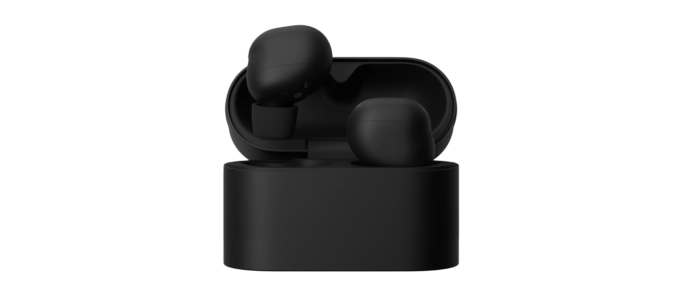
Galaxy Buds4 introduce tighter integration, including voice-driven AI commands and head gesture controls that allow users to interact without touching the device.
Pre-orders began on February 25, accompanied by unified design language and refined color options across the lineup.
Samsung Care+ continues as an optional protection service, reflecting an ecosystem strategy built around device continuity rather than standalone hardware.
Within the broader Samsung Galaxy series, the new lineup emphasizes consistency across devices while expanding AI coordination.
Understanding the Ripple Effect Across Users and Industries
This launch affects more than just smartphone buyers, influencing how consumers interact with devices, how developers build AI-driven apps, and how businesses approach mobile productivity and security in the long term.
A. Everyday Users at the Center of the Change
For everyday users, improvements focus on reducing complexity. AI suggestions simplify routine actions, cameras adapt more reliably to lighting conditions, and privacy tools address real-world concerns.
The experience becomes less about learning features and more about letting the phone adapt automatically.
B. New Opportunities for the App Ecosystem
Developers gain access to deeper AI integration and agent-based workflows. Background task automation opens opportunities for apps that cooperate instead of competing for attention.
This could encourage new categories of productivity and contextual applications.
C. Enterprise Benefits in an AI-Driven Mobile World
Business users benefit from AI call screening, stronger device security, and long-term update commitments.
Productivity gains come from automated summaries and intelligent assistance, while enterprise security layers help address compliance and data protection needs.
A Turning Point in the Evolution of Premium Smartphones
The introduction of the Samsung Galaxy S26 reflects a broader industry shift: AI is moving from a visible feature to an invisible foundation.
Instead of showcasing isolated capabilities, manufacturers are embedding intelligence directly into operating systems and hardware design.
On-device processing also signals a growing emphasis on privacy and speed, reducing dependence on cloud-based computation.
In the premium tier, competition increasingly revolves around context awareness, devices understanding when and why users act, not just how quickly they respond.
This strategy positions Samsung’s latest model within a market redefining value around intelligence rather than raw specifications.
The Road Ahead for AI-Powered Devices
The reaction of the market will probably rely on the consistency of daily life, where users can observe these AI enhancements.
Innovation may emphasize the ability in the short term, whereas success in the long term relies on the dependability and utility over months of usage.
The issue of how mature agent-style AI interactions will experience outside of controlled demonstrations is still open to question. Updates to software during the life cycle of the device will be important in perception creation.
As Samsung S26 continues to be updated, its effects can be less about what is new in the market and more about continuous improvement.
Placing the AI Smartphone Moment in Perspective
The Galaxy S26 release is a significant, though not a revolutionary, achievement in the history of smartphones. Rather than redefining hardware only, it redefines the phone as an adaptive computing companion.
The industry seems to be moving into a place where smartness will be in the background, and it will be directing the experiences rather than making them noticeable.
Its success will be determined by how this vision is realized in the long run. However, the trend is also evident: mobile technology is heading in the direction of systems that know us, systems that anticipate our needs, and systems that become part of our lives.










Leave a comment