

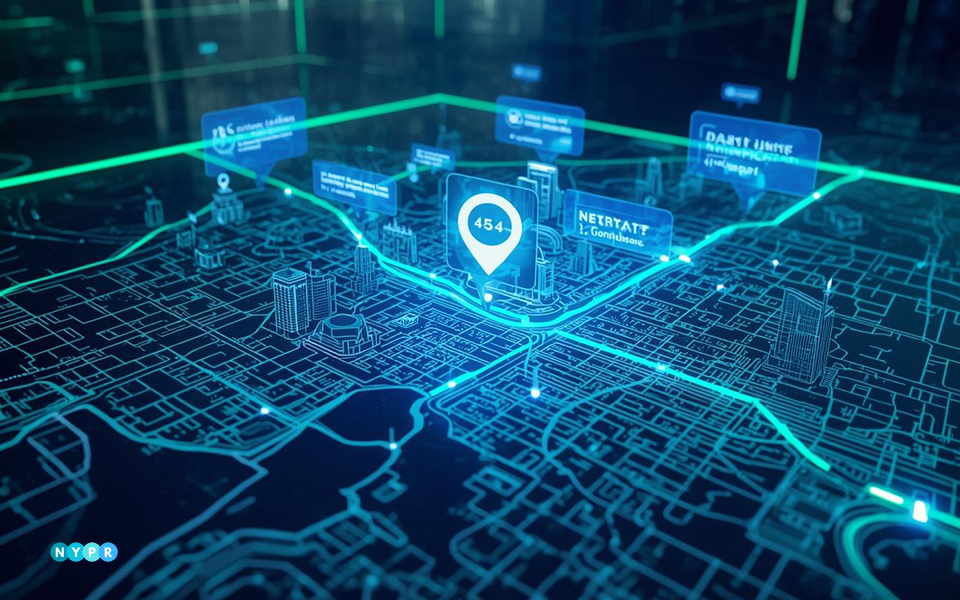
Google Maps has undergone a significant upgrade that incorporates artificial intelligence and daily navigation. The company introduced a feature, named Ask Maps, which is driven by its Gemini AI models, and a redesigned driving experience, named Immersive Navigation.
The update allows people to pose natural queries regarding places and things to do instead of typing straightforward search queries. Maps are now able to reply with contextual information, display locations on the map, and assist users in making visit plans easier.
Meanwhile, Google has rebuilt the visual navigation platform to visualize roads and the environment in 3D.
To common users, the changes are supposed to make it easier to navigate and plan their visits to cities. In the case of the tech industry, the update is an indication of a wider move towards AI-based digital tools that are capable of reading context and not merely recognizing keywords.
Inside Google’s Latest Maps Update
Google announced that it is bringing its Gemini AI models directly into Google Maps. The centerpiece of the update is Ask Maps, a conversational feature that allows users to interact with Maps as if they were speaking with a guide.
Instead of entering a short search phrase, users can ask more detailed questions about what they want to find. The system then analyzes the request and provides suggestions directly on the map.
Google describes the shift as a fundamental change to how digital maps function.
“Today, Google Maps is fundamentally changing what a map can do. By bringing together the world’s freshest map with our most capable Gemini models, we’re transforming exploration into a simple conversation and making driving more intuitive than ever with our biggest navigation upgrade in over a decade.”
The new system allows questions that previously required multiple searches. For example, a user might ask where they can charge their phone without waiting in line, or where to find tennis courts that have lights available at night.
Instead of forcing users to read dozens of reviews, the system analyzes available data and recommends locations that match the request. Ask Maps also uses personalization. If someone frequently searches for coffee shops or saves restaurants in a particular neighborhood, the system can incorporate that history when suggesting places.
In practice, this means the map can recommend locations that match a user’s past preferences without requiring additional filtering.
Planning Trips Through Natural Conversations
The introduction of Ask Maps changes how people interact with location search. Previously, map apps relied on keyword searches like “pizza near me” or “parking garage.” Users then scrolled through lists and reviews.
Now the experience is designed to work more like a conversation. A user could ask where to meet friends for dinner with outdoor seating, or request a quiet café with reliable Wi-Fi.
Ask Maps interprets the request, highlights suitable places directly on the map, and provides additional details about each option. The system can also help users turn suggestions into plans.
After identifying a place, users can save it, share it with friends, or book a reservation if the business supports online booking. Locations can also be added to a travel plan or itinerary. Once a destination is selected, the route can immediately transition into navigation.
This approach removes several steps from the traditional search process. Instead of jumping between different apps or search queries, users can move from discovery to directions within a single conversation.
A New Look at Navigation Behind the Wheel
Together with the AI search system, Google has reconstructed its driving experience into what it has called Immersive Navigation. The upgrade is the greatest change in the navigation interface in over ten years.
The new system is aimed at demonstrating the road environment in a more realistic manner. The routes are presented with a more spatial depth. Structures, landscape, and overbridges are three-dimensional, and the driver is able to have a better knowledge of the situation around him.
Elements of the roads are also brought out in a better manner. The main features, which include the lanes, traffic lights, crosswalks, and stop signs, are directly visible to the drivers in the line of the route. Such information is helpful because they allow users to expect future turns or crossroads and arrive at them in advance.
The technology of this upgrade is based on Gemini models of Street View photography analysis and aerial mapping data analysis. This visual data helps the system create a more accurate digital representation of real-world roads.
For drivers, the goal is simple: reduce uncertainty while navigating unfamiliar areas. Instead of reacting at the last second, users can understand the layout of the road ahead in advance.
Better Route Awareness With Live Road Data
The navigation improvements extend beyond visuals. Google Maps now provides a broader preview of upcoming routes so drivers can better understand what lies ahead.
A new smart zoom system adjusts the map view automatically as drivers approach complex intersections or upcoming turns. Buildings near the route may appear transparent on the display, helping drivers see the road layout more clearly.
Lane guidance has also been refined to reduce confusion in multi-lane traffic. Behind the scenes, Google Maps processes enormous amounts of live traffic data. According to the company, the system handles more than 5 million traffic updates every second around the world.
This data helps Maps calculate route changes and travel times in real time. The app now also shows clearer comparisons between alternative routes. Drivers may see options that highlight trade-offs, such as a faster toll road or a slightly longer route with less congestion.
Community-driven updates remain an important part of the system as well. Users can report crashes, road closures, or construction areas, which then appear in navigation alerts for other drivers.
Helping Drivers Reach the Exact Destination
One of the most common frustrations with navigation apps occurs at the very end of a trip. Drivers often reach the destination area but struggle to locate the exact entrance or parking location. Google’s update adds new tools designed to simplify that final step.
Maps can now show a preview of the destination area before arrival. The system may suggest nearby parking options or highlight the building entrance most likely to be used. It can also indicate which side of the street the destination sits on.
These small details help drivers prepare for arrival instead of searching for the correct location at the last moment. For people visiting unfamiliar cities or busy neighborhoods, this change could reduce a common source of stress.
Who Will Notice the Biggest Changes?
The update will be most noticeable for everyday users who rely on maps to explore cities, plan outings, or navigate unfamiliar areas. With conversational search and clearer route visuals, people can find places faster and understand their surroundings more easily while traveling.
At the same time, local businesses and developers may see changes in how locations are discovered and recommended within the map experience.
A. How Daily Users Benefit?
For regular users, the update simplifies how people discover places and navigate through cities. Conversational search removes the need to experiment with different keywords.
The improved driving visuals also make navigation easier to understand, especially in unfamiliar areas.
B. What It Means for Local Businesses?
Local businesses may benefit from the new system as well. Restaurants, cafés, entertainment venues, and stores could gain more visibility when users ask detailed questions about places to visit.
Because Ask Maps focuses on context, businesses that match specific needs may appear more often in search results.
C. Implications for Developers and AI Platforms
The update also highlights a growing trend in the tech industry. Large language models are increasingly becoming part of everyday digital infrastructure.
Rather than existing only in chatbots, these AI systems are now embedded inside tools people use daily. Maps, search engines, and productivity apps are becoming more conversational as a result.
What This Signals for the Future of Mapping?
Digital maps have historically been search tools. Users typed a location, and the app generated a route. This update suggests a different direction. Maps are evolving into AI-powered assistants that help users discover places, make decisions, and plan activities.
Instead of simply delivering directions, systems can now analyze context, preferences, and environmental data. This shift could reshape how people use mapping apps in daily life.
Competition in the navigation space may also intensify as companies race to integrate generative AI into consumer products. The latest improvements to Google Maps navigation highlight how mapping platforms are becoming part of the broader AI ecosystem.
Where the Rollout Goes From Here?
According to Google, the new features will be introduced gradually. Immersive Navigation will start out in the United States, and other areas are anticipated to be launched in the near future.
The update will come on various platforms. Android phones, iPhones, Android Auto, Apple CarPlay, and cars with Google built-in systems are supported as well.
Ask Maps will also evolve with time as the company will perfect the process of the Gemini models interpreting real-world questions. Conversational AI will continue to evolve, and communication with maps can start to be seen as a conversation instead of a standard search.
The Bigger Picture for Digital Navigation
Navigation apps are quietly evolving into something more than digital road guides. They are becoming tools that help people decide where to go, what to do, and how to get there with less effort.
With features like Ask Maps and Immersive Navigation, Google is pushing mapping technology toward a future where the map does more than show a route.
It acts as a travel companion that guides decisions from discovery to arrival, long before users begin following Google Maps directions.












Leave a comment