

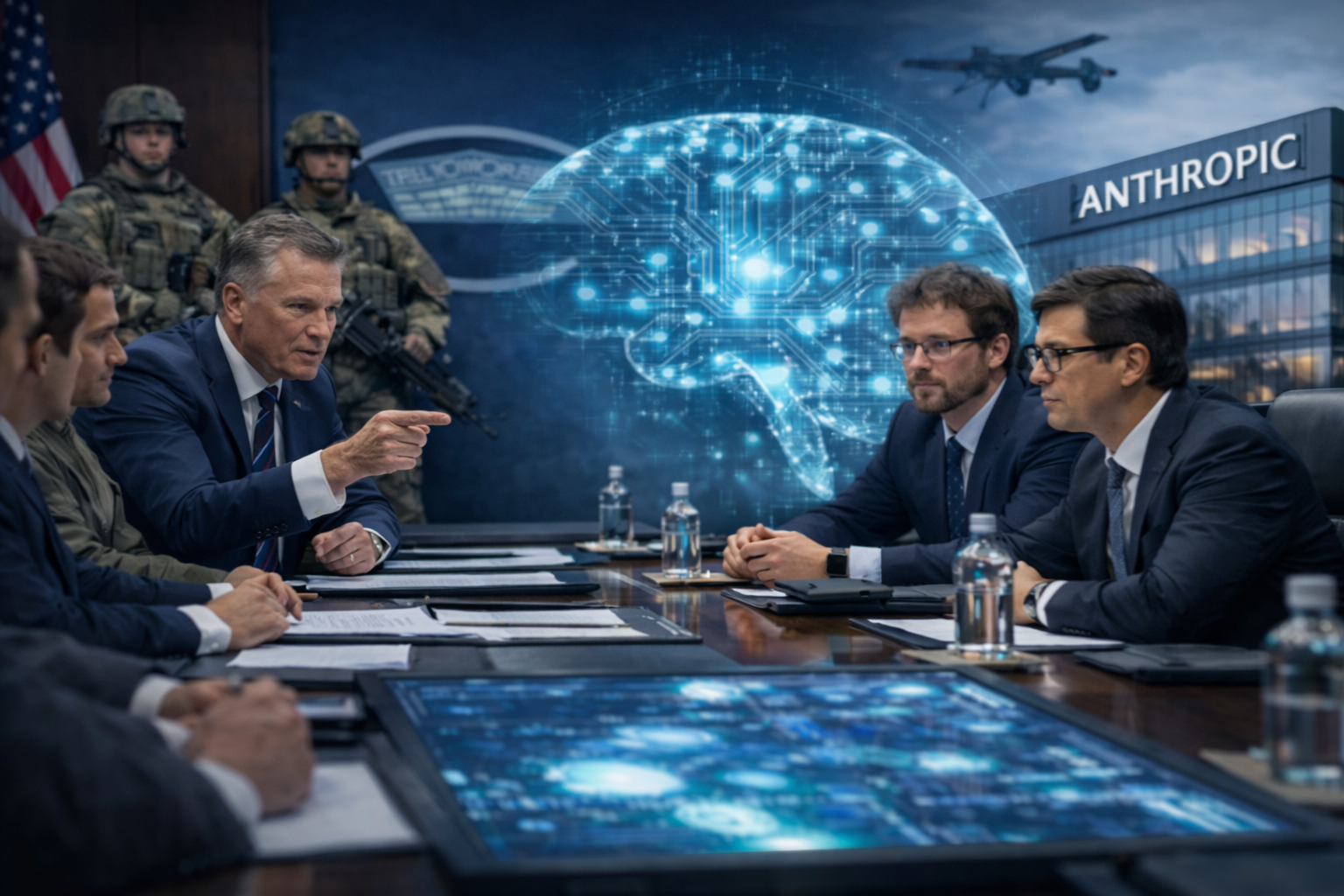
The Pentagon is pressing one of the world’s leading artificial intelligence firms to reconsider how tightly it controls the use of its technology in defense work. U.S.Defense Secretary Pete Hegseth has reportedly given Anthropic until Friday to step back from certain safeguards that limit how its systems can be used by the military.
The dispute centers on built-in restrictions that govern how the company’s AI systems function in military settings. The result influences future co-operation between governments and technology companies when doing national security projects. It also brings more general concerns about the extent to which AI businesses ought to establish boundaries on their own products.
A Growing Rift Between Defense Officials and an AI Firm
The disagreement surfaced after discussions between senior Pentagon officials and executives from the anthropic company. Details of the deadline were first reported by Axios, which said Hegseth made clear that the company has until Friday to reconsider certain safeguards tied to military applications.
At the center of the talks is Anthropic’s Claude, a widely used large language model designed with strict usage policies. Those policies are meant to prevent misuse and reduce the risk of harm.
Defense officials have raised concerns that some of those built-in restrictions may limit operational flexibility. The issue came to a head during meetings between Hegseth and Anthropic’s leadership. The discussions centered on how the system manages tasks that may overlap with defense operations.
Anthropic has publicly emphasized its commitment to responsible development. The Pentagon, meanwhile, is seeking tools that can function without limits it sees as operational barriers. Neither side has described the situation as a breakdown in talks. But the deadline underscores the seriousness of the disagreement.
The Broader Debate Over AI and Defense Policy
The tension reflects a wider debate about how artificial intelligence should be deployed in sensitive environments. AI systems are increasingly used to analyze data, support logistics, and assist decision-making. In defense settings, they can process vast amounts of information faster than human teams.
At the same time, military use raises concerns about autonomy, accountability, and unintended consequences. Companies often build guardrails into their systems to prevent certain types of content generation or decision support. These limits can include restrictions on targeting assistance or operational planning tied directly to combat.
Governments may argue that such limits reduce effectiveness. Technology firms may counter that safeguards are essential to prevent misuse and ensure compliance with internal ethical standards.
The debate is not limited to one country. As AI in military programs expands globally, similar questions are emerging in Europe, Asia, and beyond. Governments want reliable, adaptable tools. Companies want to protect their technology from misuse and reputational risk. That gap is now visible in this standoff.
Ripple Effects Across the AI Industry
The situation is being closely watched across the technology industry. Many AI firms are exploring or are already engaged in government contracts. Defense departments represent major potential customers, particularly as countries increase spending on advanced systems.
If the Pentagon pushes successfully for fewer restrictions, it could set a precedent for future procurement terms. Companies may face pressure to design flexible systems tailored to government needs.
On the other hand, if firms hold firm on safeguards, they may establish clearer boundaries around acceptable use. Investors and partners are also paying attention. AI companies must balance growth opportunities with regulatory scrutiny and public perception.
A visible dispute between a defense department and a major AI developer could influence how other firms structure their policies. The global market for advanced AI tools is competitive. Governments may look for suppliers willing to meet operational requirements with fewer constraints. That dynamic could shape future partnerships.
Where the Impact Lands
The effects of this standoff extend beyond a single contract. It touches technology firms navigating defense work, military agencies seeking advanced tools, and the engineers building these systems. Each group faces practical and ethical decisions as the debate unfolds.
A. Private AI Firms Navigating Government Demands
AI firms working with governments must weigh revenue against reputational risk. Defense contracts can be significant. But they also bring public scrutiny.
Companies may face internal debates over employee concerns and ethical guidelines. Clear policies can protect brand identity. Yet rigid rules may limit commercial opportunities.
B. Military Planners Seeking Operational Flexibility
Military planners are under pressure to modernize. AI tools promise faster analysis and improved coordination. Operational leaders may want systems that function without built-in barriers.
At the same time, agencies must comply with national and international law. They must also ensure oversight and accountability.
C. The Technical Teams Behind the Guardrails
Technical teams build the safeguards into these systems. They decide how models respond to sensitive queries. When the government needs to shift, engineers must translate policy decisions into code. That can raise professional and ethical questions about acceptable use cases.
Negotiation Leverage and Institutional Limits
The immediate issue is the reported Friday deadline. If Anthropic agrees to modify its safeguards, it could unlock broader defense collaboration. It would signal flexibility in adapting systems for government use.
If the company maintains its current framework, negotiations may continue. The Pentagon could explore other vendors or adjust contract terms. Procurement processes in defense are complex. Contracts involve legal review, compliance checks, and long timelines. Any shift in policy may ripple through future agreements.
Oversight is another factor. Lawmakers in several countries are examining how AI is integrated into defense systems. Changes to safeguards may attract political attention. Transparency will likely remain central. Governments want tools they can rely on. Companies want clarity about acceptable boundaries. The outcome may influence how similar disputes are handled elsewhere.
The Immediate Path Forward
Both sides are likely to keep on discussing in the short run. The Pentagon will evaluate how the policies of the company meet the operational requirements. The management of Anthropic will have to consider the balance between the commercial opportunities and its stated principles.
There are more general policy arguments going on beyond this case. Governments are developing plans for how AI can be applied in defense operations. International organizations are debating norms and possible boundaries. The resolution of this situation may enlighten such debates.
Other developers of AI are keeping an eye. The same applies to policymakers in allied countries who encounter such decisions regarding procurement and safeguards. The technological environment is changing rapidly around the world. The military is seeking high-tech equipment. The role of AI companies in that change is being determined.
A Signal of a Larger Shift
This dispute is not just about one company or one deadline. It reflects a structural change in how governments and advanced technology providers interact.
The military has relied on commercial solutions in the development of major innovations. In their turn, these firms are developing policies that influence the usage of their tools. Still, the tension between the freedom of operation and corporate protection is not yet established.
How that balance can be achieved will determine the procurement approaches, the corporate governance, and the trust that people may have towards AI systems in the global arena. In the meantime, the Friday deadline is being considered. However, the bigger debate on AI, responsibility, and state authority is not over.










Leave a comment