

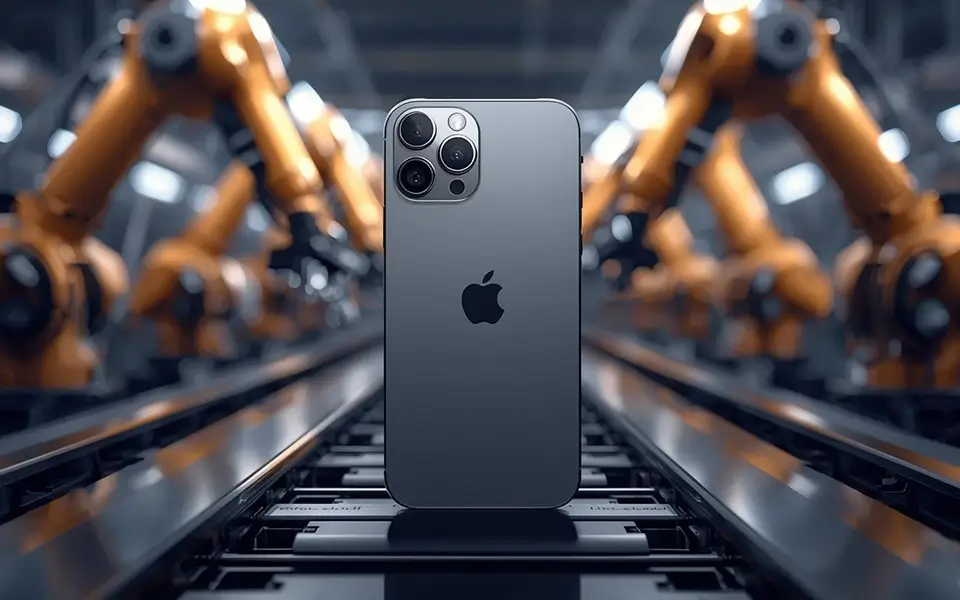
Apple’s upcoming iPhone 18 Pro has reportedly entered the test production stage, months ahead of its expected launch. A well-known tipster claims the device is now undergoing early manufacturing runs, with minimal material changes compared to its predecessor.
This stage marks a critical checkpoint before full-scale mass production begins. The move suggests development is progressing on schedule. For consumers and industry partners, it offers an early glimpse into what this cycle of the Apple iPhone series may prioritize.
What Triggered the Production Move?
The latest update comes from a supply chain–focused tipster who indicated that the iPhone 18 Pro has moved into test production, sometimes referred to as trial manufacturing. In Apple’s manufacturing timeline, this phase typically follows engineering validation. It involves limited production runs to verify design stability, assembly precision, and component integration at scale.
Test production does not mean devices are ready for store shelves. Instead, it ensures that factories can reproduce the final design consistently before committing to mass output. Historically, Apple begins this phase several months before launch. If the schedule aligns with previous years, the iPhone 18 lineup could be tracking toward a September unveiling.
Some reports also reference early mass production testing. This is a transitional step between trial assembly and full commercial manufacturing. It allows Apple and its partners to identify yield issues, material inconsistencies, or logistical bottlenecks before ramping up. At this stage, the focus is on stability rather than marketing features.
Reading Between the Lines: What’s Minimal Material Changes’ Suggest
One detail stands out in the leak: minimal material changes. In smartphone development, material shifts often signal design overhauls. A new chassis composition, altered frame structure, or display material update usually indicates a visible transformation.
If reports are accurate, the iPhone 18 Pro may retain a similar external build to the previous generation. That does not imply stagnation. Instead, it may point to refinement.
Within the Apple iPhone series, Apple has historically alternated between redesign cycles and performance-focused upgrades. Some years bring noticeable hardware changes. Others concentrate on internal improvements such as chip efficiency, camera tuning, or thermal optimization.
Minimal material changes could suggest that Apple is focusing on internal architecture rather than exterior reinvention. It may also indicate cost stabilization. Material continuity can simplify supply chains and reduce production risks. That approach often supports predictable margins and smoother scaling.
Without visible structural adjustments, engineering resources may have been directed toward silicon, battery management, or display calibration. At this stage, however, these remain production-based interpretations rather than feature confirmations.
Production Readiness and Market Ripples
Entering test production sends a broader signal beyond the device itself. It suggests that core components like displays, processors, camera modules, and casings are already locked in. Suppliers must be confident in tooling readiness and volume capability to proceed.
For Apple’s manufacturing ecosystem, stability matters. Trial production ensures assembly partners can maintain yield rates before expanding capacity.
There has also been discussion of a potential split launch strategy in future cycles, where certain models are released at different times. If that approach continues, early production testing could align with staggered logistics planning.
From a market timing perspective, this stage positions Apple comfortably within its traditional release window. Competitors often adjust flagship announcements around Apple’s September schedule. An early start reduces last-minute bottlenecks, especially in a market where component shortages and geopolitical shifts can disrupt timelines.
For investors and analysts, entering test production usually indicates low development risk. Major design hurdles are likely resolved by this point.
Impact Across Apple’s Hardware Ecosystem
This development carries implications beyond Apple’s assembly lines, influencing expectations across buyers, suppliers, and ecosystem partners. As production moves forward, each group is watching closely for signals about stability, upgrades, and market timing.
A. What This Means for Upgrade Decisions
For buyers, minimal material changes may shape upgrade expectations. Those waiting for a dramatic redesign may find this cycle more evolutionary than revolutionary. However, steady refinement can translate to better durability and performance consistency.
Pricing assumptions remain open. Material stability can support cost control, but broader market factors such as inflation and component pricing still influence retail decisions. Consumers considering older models may interpret this as a continuation of the year within the iPhone 18 generation rather than a structural reset.
B. Production Stability for Apple’s Global Network
Suppliers often face higher risks during redesign cycles. New materials require retooling, validation, and sometimes entirely new manufacturing lines. Minimal material changes can ease that burden.
For assembly partners, production predictability improves efficiency. Yield stabilization during test production reduces waste and streamlines ramp-up. That consistency can strengthen long-term supply relationships within the Apple iPhone series ecosystem.
C. Continuity for Apps, Accessories, and Integrations
Hardware continuity also benefits developers. When physical dimensions and core hardware architecture remain consistent, accessory makers face fewer adjustments.
Case manufacturers, charging accessory brands, and other ecosystem players can plan inventory with reduced uncertainty. App developers may also experience smoother performance optimization if the underlying silicon architecture follows an iterative path rather than a structural shift.
Production Calendar Alignment in a Slower Upgrade Market
The smartphone market has entered a period of incremental upgrades rather than sweeping change. Consumers are holding onto devices longer. Upgrade cycles have stretched in several regions.
In that environment, production timing becomes more strategic. Entering test production months before launch suggests Apple aims to maintain its predictable annual rhythm. That consistency helps anchor consumer expectations and retail planning worldwide.
September remains the traditional unveiling window for flagship models in the Apple iPhone series. Aligning manufacturing milestones now supports that timeline. It also reflects broader supply chain normalization. After years of pandemic-related disruptions and semiconductor shortages, stable test production indicates improved operational confidence.
For global markets, including North America, Europe, and Asia, synchronized production planning ensures coordinated release waves. Timing is not just about hardware readiness. It influences marketing campaigns, retail inventory cycles, and carrier partnerships.
From Trial Runs to Full-Scale Manufacturing
Test production is only one checkpoint. The next steps typically include expanded engineering validation tests, often referred to as EVT and DVT phases in industry terminology.
Following successful trials, Apple transitions into larger-scale pilot production. This stage pushes output closer to commercial volumes while monitoring defect rates. Regulatory certification also runs in parallel. Devices must meet regional compliance standards before shipment.
If no major setbacks emerge, mass production ramps up in the months leading to launch. Open questions remain around performance upgrades, camera improvements, and chip advancements. Those details usually surface closer to announcement season. For now, the emphasis remains on production readiness rather than feature revelation.
A Measured Signal Within a Larger Strategy
The iPhone 18 Pro entering test production is not headline-grabbing in isolation. Yet it carries strategic weight. Minimal material changes suggest a cycle centered on refinement rather than reinvention.
Within the broader iPhone 18 roadmap, this approach may reinforce stability while laying groundwork for future transitions. Apple has often balanced bold redesign years with quieter optimization phases. Incremental upgrades can strengthen reliability, improve margins, and maintain brand continuity.
In a maturing smartphone market, steady evolution sometimes proves as important as dramatic change. As the production calendar advances, clearer details will emerge. For now, this stage confirms one thing: the next chapter of the Apple iPhone series is moving forward on schedule, with measured adjustments rather than sweeping shifts.














Leave a comment