

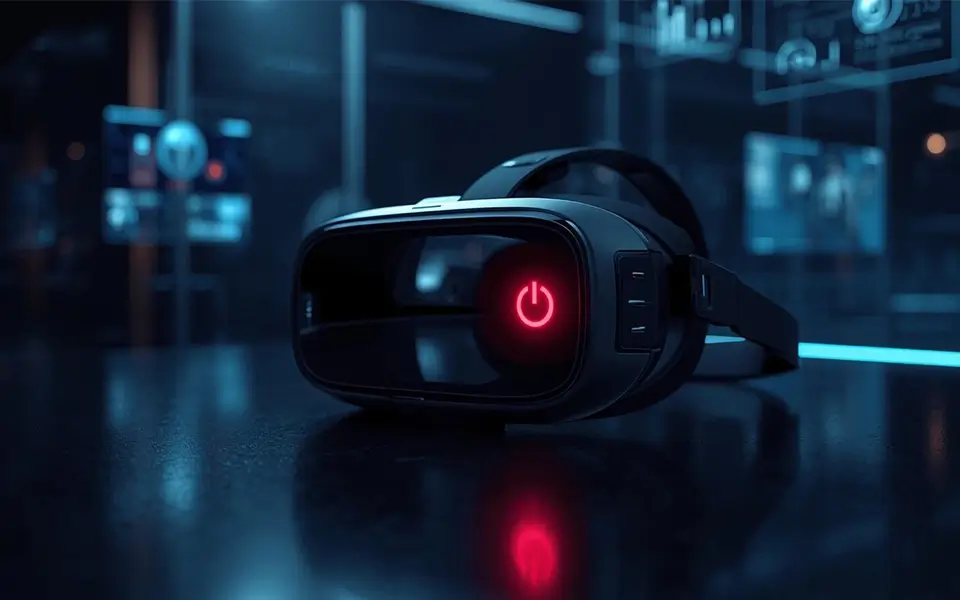
As part of ongoing layoffs within its Reality Labs division, Meta has closed three virtual reality game studios, marking another step back from its earlier metaverse ambitions. In its continuing layoffs of the Reality Labs department, another move backwards from its previous metaverse ambitions, Meta has closed three virtual reality game studios. The shift impacts divisions supporting a number of popular VR franchises and represents a wider internal rearrangement.
Since Meta is reformulating its long-term bet placements, the choice underscores a transition to more short-term concerns like mobile platforms and artificial intelligence. To the developers, consumers, and the general VR ecosystem, the shutdowns cast new doubts on the future speed and direction of immersive gaming with Meta at the helm.
Inside Meta’s Decision To Close Its VR Studios
According to the reporting of Game Developer and Video Games Chronicle, three VR-based game studios of Meta have been closed: Twisted Pixel, Sanzaru Games, and Ready at Dawn. Each of the three studios was a part of the Reality Labs unit of Meta, which manages the virtual and augmented reality products of the company, including Quest headsets and VR content.
The shutdowns are also a part of an extended wave of layoffs affecting Reality Labs, a division that has been registering several years of losses in the billions. Although Meta has not written the exact size of the headcount associated with the closures of these studios, employees who were so affected were notified in-house within the past several weeks.
These studios worked on prominent VR projects, such as the adaptation of well-known franchises and original experience-based projects that are meant to demonstrate the hardware offered by Meta. Their shutdown is one of the major withdrawals of first-party VR content by Meta since it started buying studios during its metaverse expansion.
Why This Move Signals A Deeper Shift At Meta
On the surface, this is a tale of downsizing and the shutting down of studios. On a deeper plane, it underscores the extreme turn in the strategic priorities of Meta.
At one point, Reality Labs sat at the center of Meta’s long-term vision, with CEO Mark Zuckerberg positioning the metaverse as the next major computing platform.To speed up mainstream adoption of VR, billions have been invested in hardware, software, and exclusive content.
Bloomberg reports that Meta is shifting its focus toward businesses with more predictable and near-term returns. These are artificial intelligence products, advertisement technology, and mobile-first experiences. By closing internal game studios, Meta signals that first-party VR games are no longer a primary driver of its growth plans.
In the case of the VR industry, this redefinition is significant since Meta has been its biggest corporate sponsor. By withdrawing, especially selectively, the largest player sends a strong message to the developers, investors, and other players in the ecosystem.
The Human Cost For Developers And Creative Teams
The results of the decision made by Meta go beyond the closure of the studios. Although the short-term impacts are experienced by the employees in Reality Labs, the ripple effect is experienced by the developers in the VR ecosystem, content partners, and users of the hardware platforms of Meta.
The company is refocusing the industry on long-term platform support and content continuity by reducing its first-party development. For stakeholders across the VR ecosystem, the move underscores how quickly strategic shifts by major tech companies can reshape the outlook for emerging technologies.
1. The Human Cost For Developers And Creative Teams
The most immediate impact is felt by employees at the affected studios. Developers, artists, designers, and support staff are now exposed to loss of jobs or reassignment, with projects being cancelled or halted suddenly.
A lot of these VR-specific teams have years of expertise developing VR, which is a niche skill set that is not readily applicable to conventional game development positions. Although the demand for seasoned developers will likely not decrease on the industry level, the talent specialized in VR will probably be restricted in its available job options.
2. What This Means For The VR Gaming Landscape
To the wider VR gaming industry, the shutdowns undermine the trust in the stability of the platform. The first-party studios tend to be the proof points, where the capabilities of the hardware are demonstrated, and the quality standard is established for the third-party developer.
With fewer internally backed titles in development, smaller studios may hesitate to commit resources to VR-exclusive projects. This may drag down the release of high-profile VR games and strengthen the idea of immersive gaming as a secondary market.
3. How Quest Users And VR Fans Are Affected
The news leaves questions of future content on the heads of Quest headset users and VR lovers. Though current games will continue, the pipeline of big-budget Meta-supported titles now is more clearly thin.
This is not the case of VR gaming being phased out. Rather, it cites a transition to smaller releases, ports, and innovation driven by third parties as opposed to blockbuster exclusives paid by Meta itself.
Broader Industry Reset Around Immersive Tech
The decision made by Meta is not in a vacuum. In the world of technology, businesses are re-evaluating long-term projects that demand lots of initial capital and have uncertain payoffs over time.
Cost discipline has become a new theme, whether it is hardware or cloud infrastructure. Firms are focusing more on products that scale more quickly and monetize in a foreseeable way.
Immersive technology has experienced the impact of this change. Following the interest in VR during the pandemic, consumer adoption of VR has been low, upgrade cycles are lengthy, and VR developers still have challenges in accessing mass-market consumers.
Meta is shutting down the studio as originally reported by Bloomberg, which is consistent with a wider internal change of its strategy. The company has increasingly prioritized artificial intelligence, mobile experiences, and advertising efficiency over large-scale metaverse investments.
This uncertainty is reflected in the reaction of the public. On X (now Twitter), commentator AndyTHPS, citing long-term platform stability as a reason, warned that closing down existing studios might destroy the confidence of VR developers relying on long-term platform stability.
Where Meta Is Likely To Focus Next
In the short run, Meta will probably invest a lot in AI in terms of its applications and its ad system. These sections are directly underpinning the main revenue model of the company.
Reality Labs will probably continue specializing in hardware refinement, mixed reality, and platform-based services, as opposed to content creation.
The future of surviving VR teams and collaborations is unclear, with open questions. Meta can progressively outsource development to other studios or publishing agreements instead of retaining it.
Notably, these closures do not signal an exit from VR. Instead, they reflect a phase of consolidation with fewer bets, tighter budgets, and a more targeted strategic focus.
A Recalibration Rather Than A Retreat
The fact that Meta decided to close three VR studios is not a judgment of virtual reality but rather an indication of shifting corporate interests.
After years of heavy investment, the company is narrowing its focus, prioritizing financial discipline over broad experimentation.
In the case of the VR industry, it can be difficult, but it’s not the end of the world. Future innovation will probably be driven by small studios, multimedia experimentation, and incremental hardware betterment.
For Meta, the message is clear. The future it is betting on now is closer, more practical, and increasingly shaped by AI. The metaverse vision has not vanished, but it has moved firmly into the background.













Leave a comment