

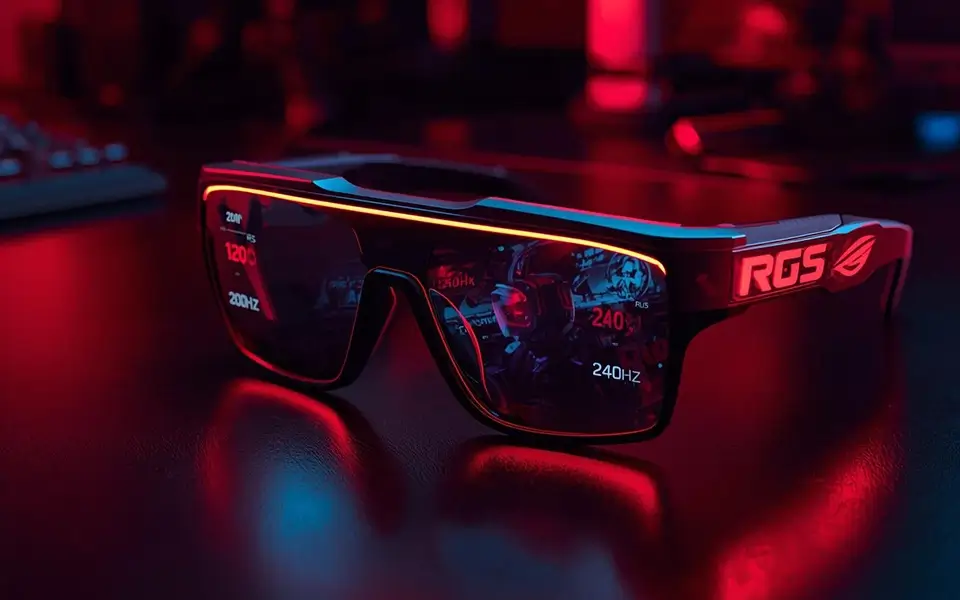
Gaming brand ROG and display specialist XR division of ASUS have come out with the ROG XREAL R1 gaming glasses, a wearable display that is fashioned towards PC and console gaming. The device is both an XR form and a 240Hz refresh rate, making it a performance-based alternative to classic monitors.
The announcement demonstrates a larger movement to more portable and personal gaming displays, which place an emphasis on speed and immersion. It offers another method of large-screen access to non-dedicated screens for gamers. To the industry, it is an indication of increased confidence in high-refresh wearable displays as a serious category of gaming.
ROG and XREAL Bring High-Performance Displays Into a Wearable Form
ASUS ROG and XREAL have revealed together the ROG XREAL R1, two gaming-oriented XR glasses that would target players wishing to have a massive virtual screen in a smaller, wearable size.
The R1 is intended to project a screen-size image directly before the eyes of the user, eliminating the use of an actual monitor or television. The most interesting specification is that it has a 240Hz refresh rate, which is normally placed in the category of competitive gaming monitors and not a wearable display.
The ROG XREAL R1 is designed to be compatible with a variety of platforms, according to the company, such as PCs, consoles, and other compatible devices. Glasses are placed as an accessory and not a freestanding system, whereby external hardware is used to provide games with the R1 taking care of the display output.
The release of the product was presented as a part of the larger gaming hardware announcements made by ROG, but it was specifically regarding the changes in display technology beyond fixed screens. The message focuses on common gaming situations rather than on the use case of experimental XR: sitting at a desk, connecting to the console, or playing in shared environments, without having to occupy a TV.
High Refresh Rates Move Beyond Traditional Gaming Monitors
The most noticeable feature of the ROG XREAL R1 is not its form factor, but what it promises in the name of performance in wearable displays.
The reason why a 240Hz refresh rate is important is that it minimizes motion blur and input latency, which is deeply monitored by competitive and fast-paced gamers. Wearable and XR displays are usually focused on resolution or field of view as opposed to refresh rate until recently. ROG and XREAL are bringing XR hardware closer to the norms of traditional esports-grade monitors by pushing 240Hz to a glasses-style display.
This action is also indicative of the change in gaming habits. Numerous gamers divide their time between the desks, living rooms, and common rooms. Portable displays are flexible without having to lose too much in terms of performance. Instead of maintaining low expectations, devices like the R1 help to preserve high-refresh gaming in more adaptable setups.
More generally, the R1 accentuates a private big-screen transition. Instead of sitting anywhere around a TV or spending money buying numerous monitors, users can make a personal display at any place. This trend is in line with the development of cloud gaming, handheld PCs, and miniature consoles, which have the advantage of flexible displays.
The Players and Industries Touched by This Change
1. What This Means for Everyday PC and Console Gamers
To PC and console players, the ROG XREAL R1 offers an alternative approach to having a high-refresh and large screen without requiring a monitor to be set up. It may particularly apply to gamers living in a common household or with smaller living conditions.
The glasses have a high refresh rate, which implies that their target market is not just casual. Wearable displays could be a good alternative to competitive players who appreciate the smooth motion and want to use them on a secondary basis, especially when traveling or temporarily. Concurrently, adoption will be determined by comfort, compatibility, and comparability of experience to traditional screens during longer durations of use.
2. How the Hardware Ecosystem May Begin to Shift
There are also implications of the R1 on the overall display and accessory market. The more wearable displays acquire features that are formerly the preserve of high-end monitors, the more peripheral vendors might regard XR glasses as a component of the standard game setup and not a product differentiation item.
This might affect the future processing of output options by GPUs, consoles, and accessories. Encouraging high refresh rates over compact cables can be even more critical as screens leave desks and go onto wearable interfaces.
3. Why Developers and Platforms Will Be Paying Attention
Although the ROG XREAL R1 does not need developers to create XR-specific content, it can still influence the priorities of optimization. High refresh displays demand higher consistency in the delivery of frames, particularly in games that are fast-paced.
The holders and creators of platforms might have to think about how their games perform on traditional monitors and TVs, as well as the handheld displays and wearable displays, all possessing varying performance expectations.
Open Questions Around Availability, Pricing, and Long-Term Direction
All the information related to pricing and locality is not established yet at the time of announcement. It causes unanswered questions regarding the availability of the ROG XREAL R1 on the various markets and whether the device can continue to be a high-end accessory or shift towards wider adoption.
The other open question would be the extent of investment ROG and XREAL intend to commit to this category. The R1 proposes more than a single experiment, especially since it focuses on performance, as opposed to novelty. Future models may perfect the level of comfort, add compatibility, or push display specifications.
This is also an area that competitors are monitoring. The closer wearable displays get to mainstream gaming hardware in terms of performance, the more likely other brands will react to the trend with similar products, driving the development of the XR display market towards a faster pace.
Wearable Gaming Displays Begin to Follow the Rules of Core Gaming Hardware
The ROG XREAL R1 gaming glasses are in the middle of two current changes in the gaming community: the need to have high-performance displays and the urge to have more portable and mobile systems. The branding of the product, which involves a known gaming brand combined with XR display knowledge, will position wearable screens as a continuation of existing gaming behavior and not an alternative to gaming behavior.
Although numerous details concerning adoption and long-term use are yet to be observed, the R1 points to a definite direction. Wearable displays are not about immersion and novelty anymore. They are more and more influenced by the same performance requirements as the modern gaming hardware, towards a time when giant high-speed screens are not necessarily attached to one point.








Leave a comment