

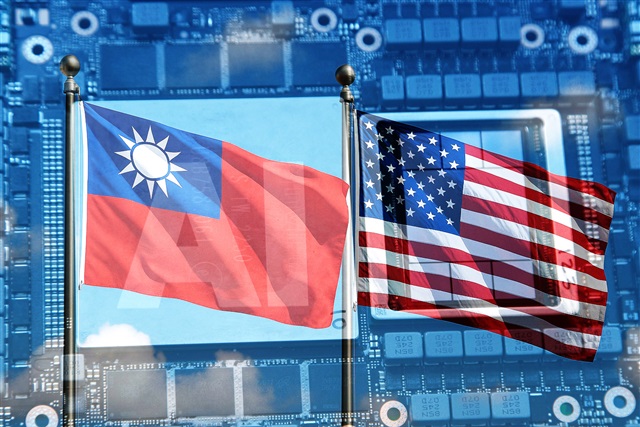
The United States and Taiwan have established a semiconductor-centered trade agreement whereby tariffs and security of supply chains are the central points of collaboration. Taiwan is increasingly becoming not only a chip producer but also a long-term AI ally to the U.S.
The relocation is accompanied by heightened competition in the global market on the basis of advanced AI chips and a review of technology reliance by governments. The contract has a policy implication for the policymakers, chipmakers, AI companies, and international supply chains that handle digital infrastructure.
A Semiconductor Focused Agreement Rooted in Tariffs and Resilience
The U.S. and Taiwan had reached a trade agreement that majorly focused on semiconductors. and the tariffs became a strategic factor. The agreement is based on mutual issues regarding supply chain resilience and access to advanced technologies.
The agreement will be used to decrease trade friction and enhance collaboration in the production of chips and related technologies. It aligns with the U.S. effort to use trade policy to favor trusted technology partners.
The officials of Taiwan have focused on more than manufacturing. They have pointed to Taiwan’s desire to partner with the U.S. on AI development, advanced chip design, and next-generation production processes.
The deal fits into a broader effort to strengthen control over essential technologies as global trade relationships change.
Why Advanced Chips Now Sit at the Center of Global Power
AI systems require advanced semiconductors to process large volumes of data and support high-performance computing. The possession of such chips has taken center stage in terms of economic competitiveness and national security.
In the case of the U.S., increased collaboration with Taiwan helps in shortening the dependence on highly concentrated supply chains. The strategy is laid out in the 2026 fact sheet of the U.S. Department of Commerce on reconstructing leadership in American semiconductor manufacturing.
According to the fact sheet, U.S. chip leadership rebuilding entails internal investment and collaboration with considered economies. Taiwan has strong manufacturing processes that make it a core part of that strategy.
Combined, the trade agreement marks a change in which tariffs, AI policy, and industrial planning are becoming progressively linked with long-term technology plans.
Global Stakeholders Watching the Future of Chip Access
The trade agreement includes a wide range of international stakeholders connected to semiconductors and AI. Governments, technology companies, and supply-chain collaborators are keeping a close eye on how it influences access to advanced chips and long-term collaboration.
It affects various parts of the world that rely on consistent semiconductor supply chains and underscores the connectedness of the current technology ecosystems.
A. Greater Clarity for Companies Navigating Cross-Border Technology Trade
When it comes to semiconductor manufacturers, the deal provides a stronger understanding of trade terms and future cooperation. Long-term planning of investment and production can be supported by predictable policy signals.
AI hardware, data center operators, and cross-border suppliers can also take advantage of better supply stability and scale operations with less uncertainty.
1. More Predictable Conditions for Long-Term Investment
Suppliers of chips and equipment might enjoy more transparent trade regulations, as well as bilateral collaboration. Less uncertainty will aid long-term planning and investment.
2. Stability for Data Centers and Next Generation Computing
Companies that construct data centers and AI models are dependent on a stable supply of high-tech chips. The closer the U.S. and Taiwan are, the more it would stabilize the supply.
3. Supply Chains Adjust to Clearer Trade Signals
The suppliers of logistics and materials, along with components connected to chip manufacturing, might experience more predictable demand with more transparent trade structures.
B. What Steadier Chip Supplies Could Mean for Everyday Technology
To the consumers, the impacts are indirect but significant. Stable semiconductor supply chains will be able to lower the price volatility and ensure stable product availability.
In the long term, such stability can contribute to maintaining quicker cycles of innovation in electronics, vehicles, and digital services that are more and more dependent on AI.
C. Planning AI Growth with Fewer Supply Uncertainties
To AI developers, access to advanced semiconductors is a key factor, particularly in training and deploying current models. An increased U.S. alignment with Taiwan can contribute to less uncertainty on the availability of chips.
Long-term compute supply also offers stability, which helps to plan better and enables AI companies to scale up infrastructure and research activities with a greater degree of confidence.
1. Why Reliable Processors Matter for AI Progress
A high-performance processor is relied on by AI developers during training and deployment. Trustworthy access affects research-related timing and system capacity.
2. Building Confidence in Future AI Infrastructure
With the expanding AI workloads, companies are provisioning computing capacity on a yearly basis. Strategic alliances decrease the risks of future supply of chips.
A Wider Shift Toward Government-Guided Chip Strategy
The U.S.-Taiwan deal can be described as part of a larger realignment of the semiconductor market. Governments are increasingly becoming involved in the production of chips with regard to where and how they are made.
The U.S. has already combined incentives, export controls, and partnerships to diversify supply chains. Trade policy serves as another lever in this effort.
Instead of depending on market forces only, the policymakers are joining trade, security, and technology leadership in concerted measures.
Implementation Details and Unanswered Coordination Questions
The focus is now changed to implementation. Trade agreements are normally implemented in phases, and the timeframes for tariff changes and regulatory alignment.
The major questions that are left open are how AI collaboration should be organized, such as standards, research collaboration, and investment alignment.
Although no specific milestones have been announced, progress is expected to be reviewed through ongoing bilateral engagement.
A Measured Step in a Broader Global Technology Realignment
This agreement is a cautious step in the U.S.-Taiwan relationship that is progressing. Linking the trade policy to the strategy of the semiconductor industry and AI, both parties can realize the strategic importance of the technology supply chains.
The acquisition is an indication of a larger global recalibration, in which chips, tariffs, and alliances are being more and more seen as sources of resilience in an AI-powered economy.











Leave a comment