

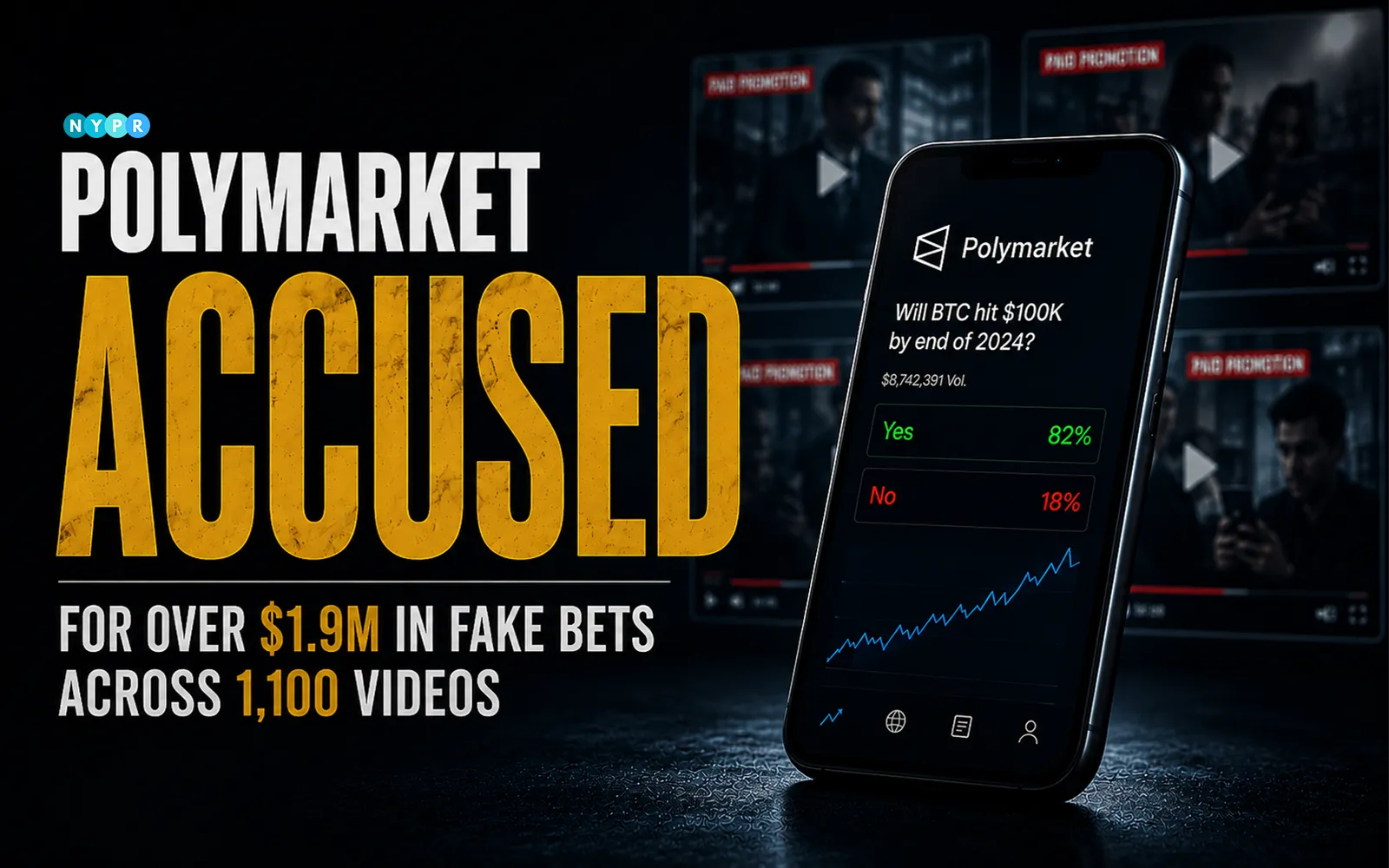
A new Wall Street Journal Polymarket report has raised fresh concerns about how the prediction market platform promoted itself online after allegations that influencers were paid to create fake betting videos using replica versions of its website.
According to the report, Polymarket worked with dozens of mostly college-age creators who posted clips showing large wagers and fabricated wins across TikTok, YouTube, and Instagram. The Journal examined 1,105 videos published between December 2025 and mid-May and found that none of the bets shown were real.
The alleged Polymarket fake bets campaign has raised fresh questions about sponsored betting content and how paid promotions are disclosed online.
Key Takeaways:
- More than 1,100 creator videos were reviewed.
- None of the roughly $1.9 million in displayed bets was real.
- The clips drew more than 140 million views.
- Influencers were reportedly paid $2,000 to $3,000 per month.
- Nearly $900,000 in shown winnings was fabricated.
- Polymarket said it plans to audit its promotional materials.
Nearly 70% of the videos examined by The Wall Street Journal featured wagers placed on websites designed to mimic the exchange’s interface. In one example, creator George Makihara appeared to win $100,000 on a bet that President Donald Trump would say “McDonald’s” in January. But the footage used in the clip was reportedly old, and users who made the actual bet lost money.
Across 118 videos, creators celebrated fabricated betting wins that, according to the report, would have actually resulted in losses of more than $166,000. The article also said creators were told not to disclose the arrangement. Some later added labels, such as “@polymarket partner,” after reporters contacted them. According to the Journal, Polymarket built replica websites that closely resembled its official platform. One site allegedly used the misspelled domain “poiymarket.com,” which looks similar at a glance.
Marketing firm Virality reportedly managed the campaign and paid creators only if at least 60% of their audience was in the United States. While Polymarket was restricted from serving U.S. customers under its 2022 settlement with the Commodity Futures Trading Commission (CFTC), the platform has since re-entered the domestic market.
Polymarket now operates a separate, federally regulated domestic branch (Polymarket US) for American users via a CFTC-approved exchange structure, while its primary, international crypto-based platform remains strictly geo-blocked in the United States.
Why It Matters:
- The case raises questions about influencer disclosure.
- It adds pressure on prediction markets facing regulation.
- It shows how paid content can blur into authentic user activity.
- It could shape how betting-related promotions are reviewed online.
Polymarket told the Journal it is committed to “accurate, fair, and transparent markets” and said it will audit its promotional content. The controversy comes as the company pushes for broader legitimacy and as regulators take a closer look at prediction markets. Kentucky sued Polymarket and rival Kalshi this week, accusing both of running unlicensed sports wagering operations.
Author’s Note: The allegations surrounding Polymarket’s fake betting videos highlight growing concerns over influencer disclosures and the blurred line between advertising and authentic content. As prediction markets expand, the controversy could shape how regulators approach sponsored betting content and creator-led promotions.

















Leave a comment