

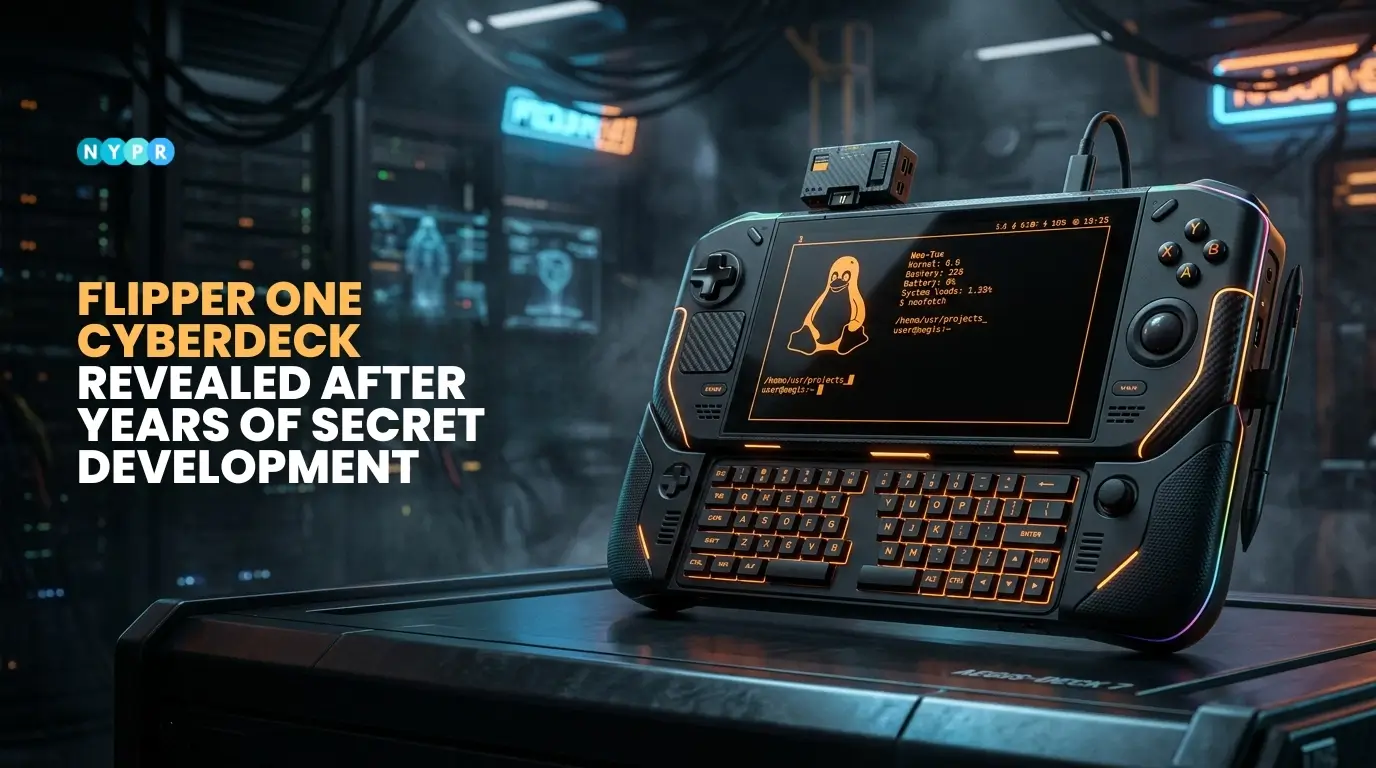
Flipper Devices has officially introduced the Flipper One cyberdeck after spending years rebuilding the project from scratch. The company openly admitted the platform is both financially and technically difficult, even saying it feels “terrified” while asking the community to help shape the device.
The launch comes at a time when developers and cybersecurity researchers are searching for open Linux hardware instead of locked-down portable systems. Unlike the popular Flipper Zero, this is not an upgrade or replacement.
Flipper One focuses on:
- Networking workflows
- SDR experimentation
- Local AI workloads
- Modular Linux computing
- Portable cybersecurity operations
Flipper says the project is designed to become one of the most open and best-documented ARM Linux platforms available today. The company wants full mainline Linux kernel support without proprietary firmware, vendor-locked BSPs, or closed binary blobs.
To achieve that, Flipper partnered with Collabora to upstream support for the Rockchip RK3576 chip directly into the Linux kernel.
The company’s open-source goals include:
- Public Linux kernel support
- Transparent hardware development
- Open engineering discussions
- Community contribution systems
- Long-term software maintainability
Unlike many commercial handheld systems, Flipper wants development to happen publicly through open documentation, task trackers, firmware discussions, and developer collaboration portals. That open-development approach also separates the device from many traditional cybersecurity tools.
While Flipper Zero focuses on offline protocols like RFID, NFC, infrared, and Sub-GHz communication, the Flipper One is designed for wired, wireless, and IP-connected networking environments.
Key connectivity features include:
- Wi-Fi 6E support
- Dual Gigabit Ethernet
- USB Ethernet speeds up to 5 Gbps
- Optional 5G modem support via M.2
- SDR and SSD expansion support
The device could appeal to:
- Penetration testers
- Linux developers
- SDR researchers
- Networking engineers
- Open-source hardware enthusiasts
Unlike heavily customized Raspberry Pi handheld projects or closed commercial pentesting tools, Flipper One aims to combine portable Linux computing with transparent hardware development. That positioning could help it stand out as a practical Linux cyberdeck for hackers and developers working in mobile environments.
Inside the device is an RK3576 8-core ARM processor paired with a Raspberry Pi RP2350 microcontroller. The MCU can continue operating the controls and display even when the Linux system is powered off.
Hardware highlights include:
- Integrated NPU for local AI processing
- HDMI 2.1 support
- USB-C DisplayPort Alt Mode
- GPIO expansion support
- M.2 modular expansion system
- Portable desktop-style workflows
Most portable cybersecurity devices still depend on heavily customized Linux environments. Flipper’s decision to upstream support directly into the Linux kernel could make software updates, maintenance, and compatibility easier for developers over time.
Flipper OS is based on Debian and introduces a profile-based workflow system that allows users to switch between different operating environments. The company is also building FlipCTL, a lightweight interface framework designed specifically for small portable displays.
Flipper believes traditional desktop Linux interfaces struggle with:
- Small-screen usability
- Portable workflows
- Touch-friendly controls
- Fast environment switching
More importantly, the project reflects a broader shift toward transparent hardware ecosystems and community-driven Linux development. Instead of hiding unfinished products behind closed doors, Flipper is openly sharing engineering decisions, software progress, and technical challenges in real time.
If the company succeeds,Flipper One for cybersecurity projects could become one of the most ambitious open-source cyberdeck platforms released in recent years.
















Leave a comment