
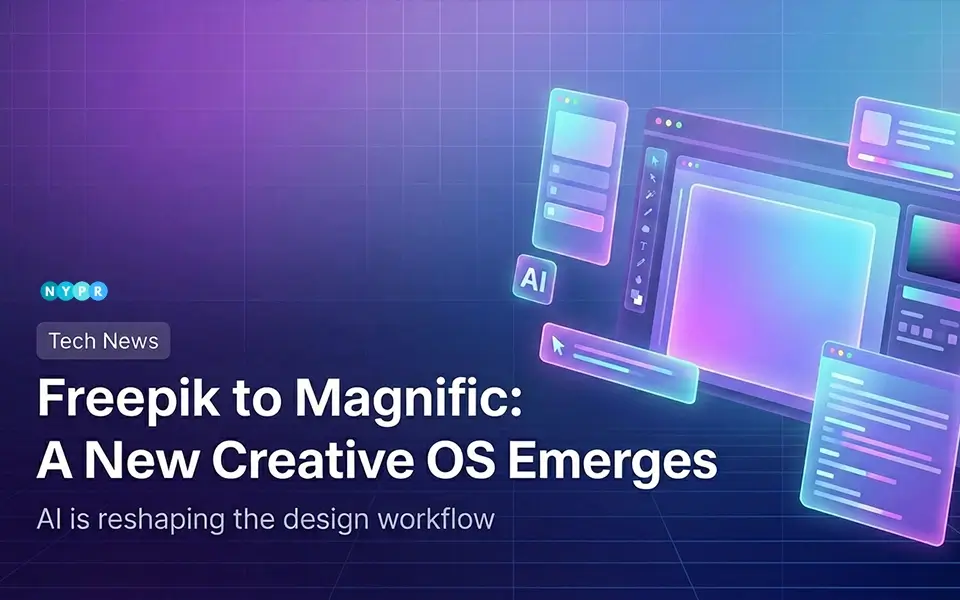
The shift from freepik to magnific marks more than a rebrand. It signals a bigger change in how creative work is imagined and produced. What began as a simple resource platform is now evolving into a full creative system powered by AI.
This move reflects a larger truth. The creative industry is undergoing its biggest transformation yet. Tools are no longer just tools. They are becoming infrastructure.
For creators, businesses, and teams, this changes everything. It lowers barriers. It speeds up production. And it expands what is possible. The transition from Freepik to Magnific is not just a company story. It mirrors a global shift in creativity itself.
From Freepik to Magnific Marks a Shift to Creative Infrastructure
Freepik launched in 2010 as a graphic resource search engine. It helped designers find icons, vectors, and images in one place.
Over time, it grew into something much bigger. The platform expanded beyond static assets into AI-powered tools. Today, it supports image generation, video creation, 3D content, and even audio workflows.
The scale is significant. Freepik now offers access to more than 250 million assets. It serves over 100 million monthly users. Around 1 million of them are paid subscribers. The company has reached an estimated $230 million in annual recurring revenue.
Its reach extends into the enterprise as well. More than 290 companies use its tools, including global names like Guess, BBC, R/GA, and Damm.
Recognition has followed. The company was ranked #11 by Andreessen Horowitz, highlighting its growing influence in the AI space.
Yet one detail stands out. Freepik was built in Málaga without venture capital backing. Its growth came from product focus and steady expansion, not external funding pressure. Now, with the transition to Magnific, the company is redefining its role.
“Freepik was where we began. Magnific is where we become irreplaceable.”
That statement captures the shift. Freepik offered access. Magnific aims to provide infrastructure.
The New Direction of Creative Work
For years, creative work was tied to skill. Design tools require training. Production required teams. Distribution required access. That model is breaking.
Creativity is shifting from skill-based to mindset-driven. What matters now is not just how well you execute, but what you imagine.
The last 15 years have already seen the democratization of creativity. Platforms like Freepik made assets accessible. Anyone could start creating without building everything from scratch.
Magnific takes that further. It removes more barriers. Budget becomes less of a constraint. Time becomes less of a limit. Gatekeepers become less relevant.
This is where the shift from tools to infrastructure becomes clear. Freepik helped people create.
Magnific helps people operate creatively at scale. That difference is subtle, but powerful. It means creativity is no longer a step in the process. It becomes the system itself.
The Impact Across the Creative Ecosystem
The change impacts nearly everyone in the creative space. Freelancers and individuals get faster and more freedom, while enterprises and teams can create and scale content more effectively.
And new creators are emerging in the digital landscape. As the power of tools becomes democratised, the distance between vision and realisation is being further reduced across industries.
1. Independent Creators Gain New Momentum
Independent creators gain the most immediate advantage. They can now produce high-quality work without large teams. Tasks that once took days can be done in hours. The creative process becomes faster and more flexible.
2. Businesses Move Faster With Fewer Limits
For businesses, speed and cost efficiency improve. Marketing teams can test ideas quickly. Visual content can be generated on demand. Campaign cycles shorten.
3. Enterprise Teams Scale With Greater Control
Large organizations benefit from consistency and scale. With AI-driven systems, creative output can be standardized across regions while still allowing customization. This balance was hard to achieve before.
4. A New Generation of Digital Creators Emerges
A new wave of creators is emerging. These are people who may not have formal training. But they have ideas, taste, and curiosity. The barrier to entry is lower than ever.
The Emergence of a No-Collar Creative Economy
A quiet shift is happening in how creative work is defined. What once required studios, agencies, and specialized teams can now be done on a laptop.
This is giving rise to what can be called a no-collar creative economy. It moves beyond traditional job roles. It blends skills. It removes rigid definitions.
A single creator can now act as designer, editor, and producer.
Tools like the magnific show how far this has gone. Enhancing image quality, refining details, and preparing visuals for professional use can now happen instantly.
These tools do not replace effort. But they reduce friction.
As a result, more people can participate. More ideas can be explored. And more content can be produced without traditional constraints.
What Stays The Human Edge in an AI Driven World in an AI World
With all this change, one question remains.
What still belongs to humans?
The answer is clear. Taste. Judgment. Vision. Obsession. These cannot be automated. AI can generate options. It can refine outputs. But it cannot decide what matters. It cannot define meaning. That responsibility stays with the creator.
This is why the shift does not remove human creativity. It reshapes it. Technology becomes a partner, not a replacement. It extends what creators can do. But it still depends on human direction. In this new system, creativity is not about mastering tools. It is about making choices.
The Road Ahead for AI-Powered Creativity
The transition from Freepik to Magnific is not the end of the story. It is the beginning of a new phase. AI creative tools will continue to expand. They will become more integrated. They will move deeper into workflows.
The line between creation and production will continue to blur. Magnific is positioning itself as a central layer in this shift. A place where creative work is not just made, but managed and scaled.
The broader industry will likely follow. More platforms will evolve into systems. More tools will merge into ecosystems. And creators will gain more control over how they work.
A Grounded View of the Creative Future
The move from freepik to magnific reflects a larger reality. Creative work is no longer defined by access to tools. It is defined by how those tools are used. The industry is moving away from rigid structures. In their place, more flexible systems are emerging.
This shift gives creators more freedom. But it also places more responsibility on them. There are fewer limits now. Fewer barriers. That means the direction of creativity is no longer set by industries alone. It is shaped by individuals. Creators are defining their own rules now.











Leave a comment