

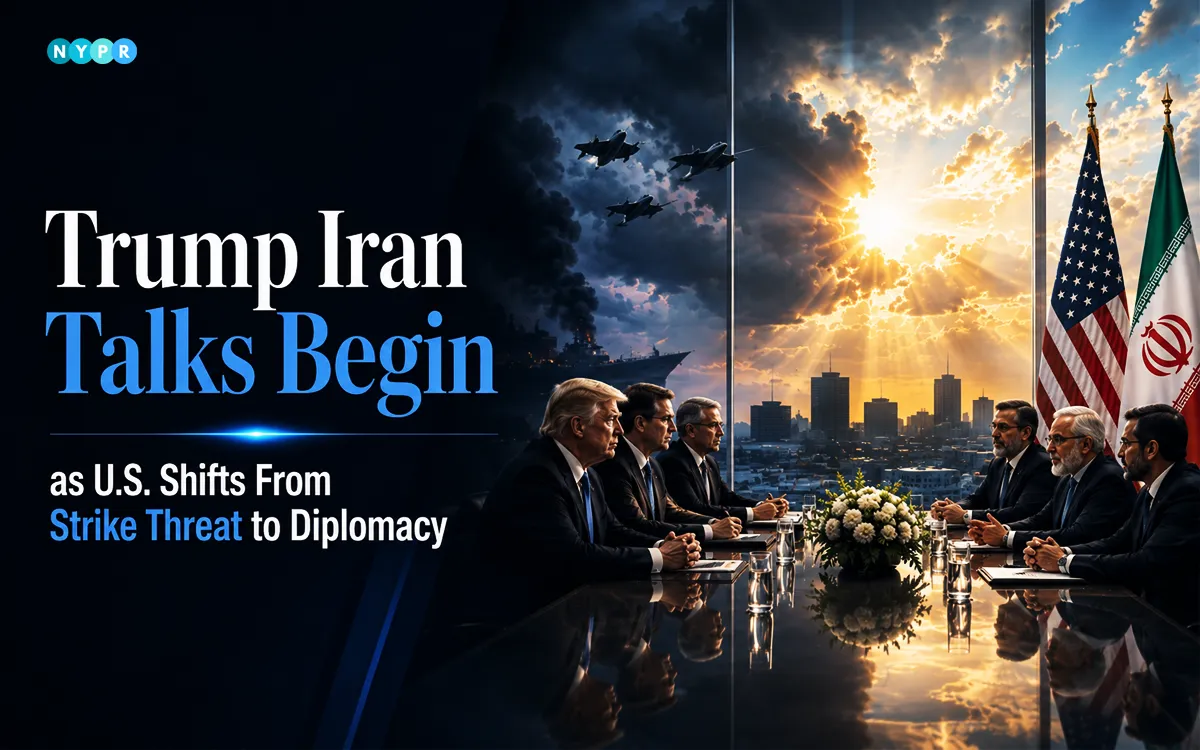
After weeks of threats and rising tensions, the focus is finally shifting from missiles to meetings. Trump-Iran talks are expected to begin on Monday. They give Washington and Tehran another chance to solve key issues through talks rather than military action.
The timing matters. The conflict has already affected energy markets, trade routes, and investor confidence. Now, governments and businesses are looking for signs that tensions can ease before the situation becomes more costly.
President Donald Trump said he had called off an imminent military strike. The decision came after regional leaders asked for more time to pursue diplomacy. He said the goal is to reopen the Strait of Hormuz and make progress on concerns surrounding Iran’s nuclear program. Trump also confirmed that talks would begin on Monday afternoon, although he did not reveal where they would take place or who would attend.
When reporters asked whether Iran had a deadline to reach an agreement, Trump declined to set one. Instead, he made it clear that he would rather give diplomacy another chance.
“Would I rather make a deal? I’m not looking to kill people because people die, a lot of people die, and we don’t want that,” Trump said.
The comment signals a softer tone than recent weeks. Military action has not been ruled out. But for now, Washington is giving diplomacy another opportunity before taking further action.
Quick Take:
- Talks are replacing immediate military action. That lowers tensions, at least for now.
- Oil markets are reacting closely. Investors are looking for signs that supply risks could ease.
- The Strait of Hormuz remains the key issue. Safe shipping through the route is vital for global energy trade.
- The outcome could reach beyond the region. Fuel prices, shipping costs, and inflation may all be affected.
The Strait of Hormuz is one of the world’s busiest routes for oil and natural gas exports. Every day, millions of barrels of oil move through this narrow waterway.
Think of it like a busy highway. If traffic stops, deliveries slow down, and transport costs rise. The same thing happens when shipping through the strait faces disruption. Oil prices often climb, and businesses around the world begin to feel the pressure.
That is why countries far from the Middle East are also watching these talks. Stable shipping through the route helps keep energy flowing and supports global trade. This conflict is no longer only about security. It is also becoming an economic challenge.
Military operations have already cost billions of dollars. At the same time, oil prices have risen during periods of increased tension. Higher energy costs can affect airlines, shipping companies, manufacturers, and eventually consumers.
- Airlines face higher fuel costs.
- Shipping companies pay more to move goods.
- Manufacturers deal with rising transport expenses.
- Consumers may see higher prices for fuel and everyday products.
This is one reason investors are following the negotiations so closely. Progress could help calm markets. A breakdown in talks could push costs higher again.
Monday’s meeting is unlikely to solve every issue. Iran’s nuclear program is still a major concern. So is regional security. Keeping the Strait of Hormuz open for safe shipping will also require more talks. Still, keeping the dialogue going would be an important first step. Many international agreements do not happen in a single meeting. They often take shape after several rounds of talks.
For now, Trump-Iran negotiations on Monday offer a chance to reduce tensions and restart dialogue. Whether that leads to lasting progress will depend on what happens after the first meeting, not just during it.
Author’s Note:
At The New York press release, we look beyond the headlines to explain why a story matters. This week’s talks could influence energy prices, global trade, and business confidence far beyond the Middle East. No one knows what will happen next. But the next few days could affect countries in the region and markets around the world.









Leave a comment