

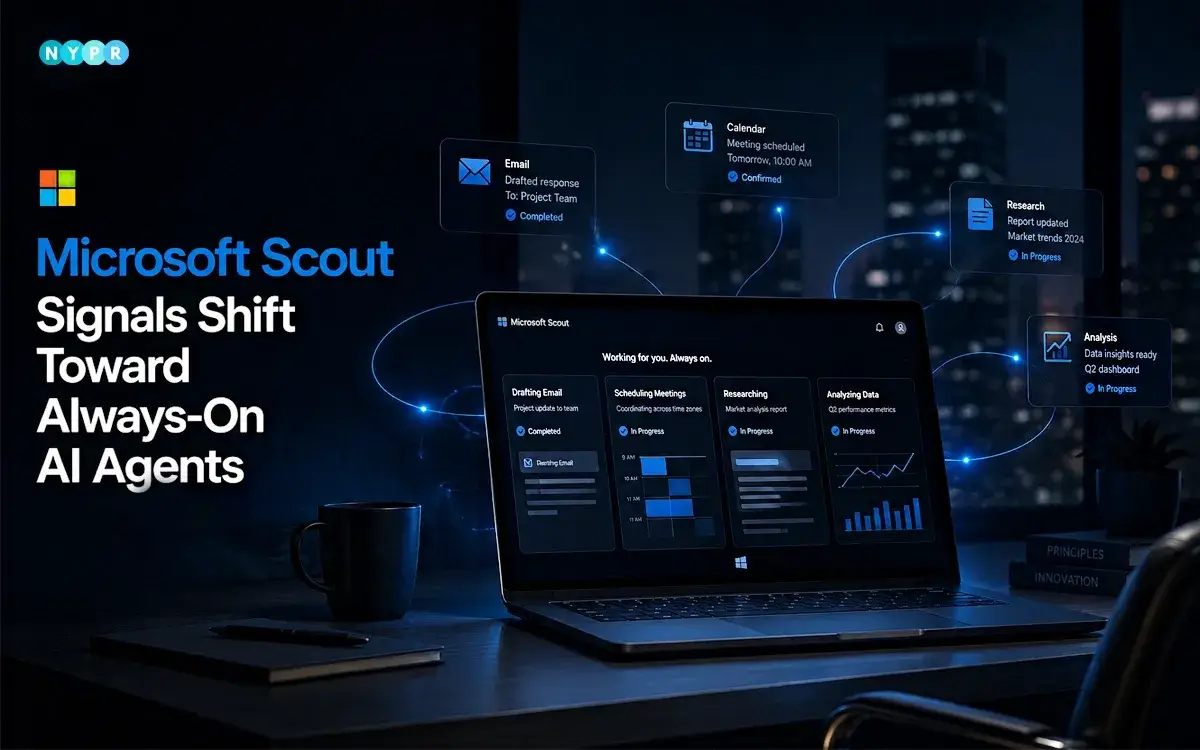
Microsoft Scout is the newest workplace AI system, designed to move beyond traditional chat-based assistants and into a new category of intelligent workplace technology. Announced as the company’s first Autopilot agent, Scout aims to help employees manage projects, schedules, communications, and workplace responsibilities with less manual coordination.
Unlike conventional AI tools that respond to requests and stop, Microsoft Scout is designed to maintain awareness across tasks and support workplace activities over time. Microsoft launches Scout as organizations increasingly seek technology that can streamline operations while meeting enterprise requirements for oversight and control.
Microsoft Scout at a Glance:
- Microsoft’s first Autopilot agent.
- Powered by OpenClaw technology.
- Uses Work IQ contextual intelligence.
- Designed for enterprise environments.
- Focused on workplace coordination and task follow-through.
The rapid adoption of generative AI has transformed content creation, research, and productivity. However, employees still spend considerable time organizing meetings, tracking deliverables, and managing communication across multiple platforms. Microsoft believes the next phase of workplace AI will focus on helping users navigate these challenges more efficiently.
What Defines an Autopilot Agent?
- Always-on operation.
- Ability to act on behalf of users.
- Persistent identity and accountability.
- Cross-application awareness.
- Permission-based actions.
These capabilities are intended to reduce administrative burden while ensuring actions remain aligned with company policies and user preferences.
Microsoft Scout is designed to work across Microsoft 365 services, including Teams, Outlook, OneDrive, and SharePoint. The system can help coordinate meetings, surface upcoming deliverables, organize schedules, and identify workflow bottlenecks before they affect productivity. By connecting information across workplace tools, Scout aims to reduce time spent on routine coordination tasks.
A key differentiator is Work IQ, Microsoft’s contextual intelligence layer that helps Scout understand how work happens across an organization. By learning work patterns, understanding priorities, and tracking pending actions, Work IQ enables more relevant recommendations and proactive assistance as workplace needs evolve.
While Microsoft Copilot primarily responds to prompts and assists with content creation, Microsoft Scout focuses on workplace coordination. It maintains context across tasks, helps organize activities, and supports longer-term initiatives, reflecting Microsoft’s broader effort to build AI systems that contribute to daily operations rather than simply provide answers.
Microsoft Scout is powered by OpenClaw open-source technology. Microsoft is also contributing policy conformance capabilities back to the project, allowing organizations to validate compliance readiness through audit-friendly processes. The move highlights the growing role of open-source infrastructure in enterprise AI.
Microsoft describes Scout as a Microsoft personal agent that can operate across workplace environments while remaining governed by organizational policies and security controls. Enterprise safeguards include governed identity controls, credential protection, human approval for sensitive actions, and permissions limited to approved tasks.
As organizations explore the next generation of workplace AI, systems like Scout could help shift enterprise software from reactive assistance toward more proactive operational support.
Author’s Note
As workplace AI evolves beyond chat-based interactions, the focus is shifting toward systems that can coordinate tasks and maintain context over time. Microsoft Scout offers an early look at how enterprise AI may increasingly move from assisting with work to helping manage it.














Leave a comment