

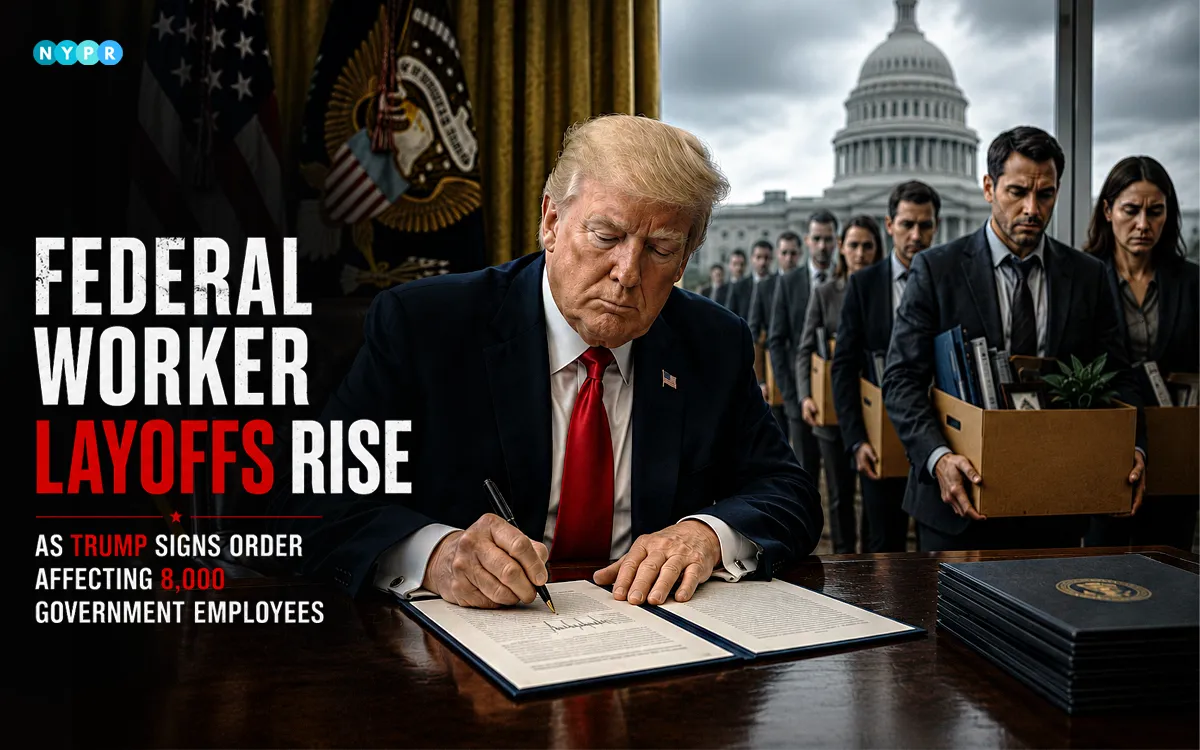
President Donald Trump signed an executive order on Wednesday that could accelerate federal worker layoffs by making it easier to remove approximately 8,000 federal employees from their positions. The measure is part of a broader effort to reshape the federal workforce and increase executive oversight of employees involved in policymaking and administrative leadership roles.
The order was released by the White House and the Office of Personnel Management (OPM), which oversees federal employment policies. Administration officials say the change is designed to strengthen accountability within federal agencies and ensure senior personnel effectively carry out administration priorities.
What the Executive Order Changes:
- Removes job protections for approximately 8,000 senior federal employees.
- Applies mainly to employees involved in policy-related responsibilities.
- Allows agencies greater flexibility in dismissing affected personnel.
- Targets positions considered influential in shaping government decisions.
- Forms part of a wider federal workforce reform effort.
Key Facts:
- The affected employees can earn up to nearly $200,000 annually.
- Many hold advisory, leadership, or policy-focused positions.
- The order could allow affected workers to be removed effectively at will.
- The administration says the changes improve accountability.
- Critics argue the move weakens long-standing civil-service protections.
The directive primarily targets senior federal employees whose roles influence policy development and implementation. While they represent a relatively small share of the government’s workforce, many serve in senior advisory, regulatory, and administrative roles that influence how federal agencies implement government policies.
Under the new framework, affected employees would lose protections that have traditionally made dismissals more difficult. The administration argues that agencies need greater flexibility to address performance concerns and ensure senior personnel remain aligned with lawful policy directives.
According to OPM Director Scott Kupor, federal agencies require employees who are willing and able to carry out lawful orders and administration priorities. Kupor said workers are free to hold any political beliefs, but agencies should have mechanisms to remove employees when those views interfere with executing lawful directives and policy objectives.
Supporters of the order argue that the changes create clearer lines of responsibility within government operations. They contend that policymakers and agency leaders should have greater authority over personnel who influence major administrative decisions.
For many government workers, however, the decision represents a significant shift in federal employment practices. Critics warn that reducing career-service protections could discourage independent advice and increase political influence over positions that have historically been insulated from partisan changes.
The decision is also being viewed as a notable development in broader Trump labor policy, which has emphasized stronger executive authority over personnel management and workforce oversight.
What It Means for Federal Agencies:
- Federal agency staffing decisions
- Government accountability and oversight
- Civil-service protections
- Executive control over policymaking positions
- Future workforce restructuring efforts
Because many affected employees hold influential advisory and leadership roles, the changes could shape how future administrations manage senior personnel across federal agencies. The order is expected to fuel continued debate over government accountability, workforce reform, and the balance between executive authority and an independent civil service.
Author’s Note
This coverage examines how policy decisions, workforce reforms, and institutional changes affect employment trends, government operations, and organizational leadership. The focus is on helping readers understand the broader implications of developments shaping the future of work and public administration.


















Leave a comment