

Imagine yourself being able to enter the virtual world of a video game, touring the ancient remains of Rome, taking a class virtually, or even practicing a surgery at the comfort of your home. It is exactly what virtual reality (VR) allows you to do. Something that was limited to movies of science fiction is now turning out to be one of the most rapidly developing technologies that is affecting various sectors, including gaming, health, education, architecture, retail, military, and business collaborations.
In recent years, there have been rapid advancements in the field of VR technology, making it more accessible and available than ever before. Major companies such as Meta, Apple, Sony, Samsung, and Google are all making massive investments in the area, with businesses and educational institutes taking advantage of VR technology to provide better interactive experiences.
Understanding Virtual Reality Beyond the Buzz
Virtual Reality (VR) is a computer-generated, three-dimensional environment that you can explore and interact with in real time. Unlike watching a movie or playing a traditional video game, VR places you inside the experience. Using a VR headset and motion-tracking sensors, the technology responds to your movements. When you look left, the virtual world moves left; when you reach out, virtual objects react.
The defining characteristic of VR is immersion, the feeling that you are truly present in a different place. This is achieved by blocking out the physical world and replacing it entirely with a digital one, engaging your senses of sight, sound, and increasingly, touch.
VR sits within a broader family of immersive technologies:
- Augmented Reality (AR): Overlays digital elements on the real world (e.g., Snapchat filters, Google Maps navigation).
- Mixed Reality (MR): Blends digital and real-world objects that interact with each other.
- Extended Reality (XR): The umbrella term for all immersive technologies, including VR, AR, and MR.
How Advanced Technology Makes Virtual Reality Feel Real
Virtual reality feels realistic because multiple advanced technologies work together at the same time. From motion tracking and 3D rendering to spatial audio and high-resolution displays, every component helps create a more immersive digital experience. These technologies respond instantly to user movements, making virtual environments feel natural, interactive, and almost real. VR is the result of several technologies working together seamlessly.
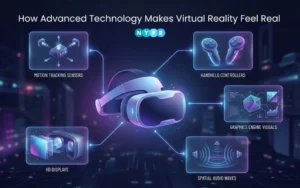
Here is how the magic happens:
1. The VR Headset (Head-Mounted Display or HMD)
The headset is the core piece of VR hardware. It contains two small screens, one for each eye, that display slightly different images to create a stereoscopic (3D) effect that mimics natural human vision.
High-end headsets refresh these displays at 90–120 frames per second to prevent motion sickness. As of 2026, standalone headsets dominate the market, accounting for 46.23% of all VR device sales, thanks to their cord-free convenience.
2. Motion Tracking
VR systems track your head and body movements using gyroscopes, accelerometers, and external sensors or cameras.
This positional tracking, often called “6 Degrees of Freedom (6DoF),” allows the system to understand not just the direction you are looking but also whether you are moving forward, backward, crouching, or leaning.
3. Controllers & Input Devices
Hand controllers let you interact with the virtual environment, picking up objects, pressing buttons, or painting in 3D space.
Next-generation systems increasingly support hand-tracking (no controller needed), haptic gloves for touch sensation, and even eye-tracking to render visuals at higher quality wherever you are looking, a technique called foveated rendering.
4. The Software & Rendering Engine
Behind every VR experience is a powerful 3D rendering engine (such as Unity or Unreal Engine) that generates the virtual world in real time.
The software must process your movements and redraw the entire scene fast enough that your brain accepts it as reality; any lag (called latency) greater than 20 milliseconds can cause discomfort.
5. Audio
Spatial audio, also called 3D sound, is essential for immersion. VR systems use audio that changes based on your position and orientation, making sounds appear to come from specific directions in the virtual space, just as they would in the real world.
The Evolution of Virtual Reality: From Early Concepts to Modern VR Technology
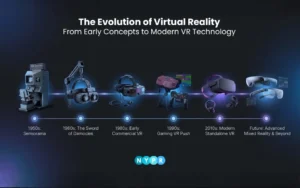
Many people think virtual reality is a modern technology, but its history actually goes back more than 70 years. Long before today’s advanced VR headsets and immersive gaming systems, researchers and inventors were already experimenting with ways to create digital experiences that could simulate real environments. Over time, VR evolved from simple concepts and experimental machines into one of the fastest-growing technologies in the world.
| Year | Milestone |
| 1950s | Morton Heilig patents the Sensorama, a multi-sensory simulator that used film, smell, vibration, and stereo sound. |
| 1965 | Ivan Sutherland describes the ‘Ultimate Display,’ an early conceptual blueprint for VR. |
| 1968 | Sutherland creates the first head-mounted display, dubbed the ‘Sword of Damocles.’ |
| 1980s | Jaron Lanier coined the term ‘Virtual Reality’ and co-founded VPL Research, selling the first commercial VR equipment. |
| 1990s | Arcades and early gaming attempted consumer VR (e.g., Nintendo’s Virtual Boy), though high costs and low quality limited adoption. |
| 2012 | Oculus launches a Kickstarter campaign for its VR headset, reigniting mainstream interest. |
| 2016 | The mass-market VR era begins with the Oculus Rift, HTC Vive, and PlayStation VR reaching consumers. |
| 2023–2024 | Meta Quest 3 and Apple Vision Pro launch, accelerating standalone and mixed-reality adoption. |
| 2025–2026 | Android XR (Samsung & Google), Apple Vision Pro M5, and Qualcomm Snapdragon XR3 redefine enterprise and consumer VR. |
What Makes Virtual Reality Feel Real?
Virtual reality feels much more immersive than simply watching a movie or playing a normal video game. Instead of viewing content from a screen, VR places users directly inside a digital environment where they can look around, interact with objects, and experience realistic movement in real time. Advanced technologies like motion tracking, spatial audio, and real-time rendering work together to create a stronger sense of presence and realism.
What makes VR different from simply watching a 3D film? It comes down to a set of core features that, together, create genuine presence:
- Immersion: The environment surrounds you on all sides, blocking out the real world completely. True immersion requires high-resolution displays, a wide field of view (typically 90–120 degrees), and minimal latency.
- Interactivity: Unlike passive media, VR responds to your actions. You can manipulate objects, move through spaces, and make decisions that affect the virtual environment.
- Presence: The psychological sense of ‘being there.’Presence is the gold standard of a successful VR experience, when your brain forgets you are wearing a headset.
- Real-Time Rendering: The virtual world must be computed and drawn anew many times per second, responding instantly to your movements.
- Multi-Sensory Feedback: Beyond sight, modern VR incorporates spatial audio, haptic (vibration) feedback, and even olfactory technology in specialized applications.
- Scalability: VR ranges from simple 360-degree video (non-interactive) to fully immersive, interactive environments with physics-based simulation.
How Is Virtual Reality Used in Everyday Life?
Virtual reality is no longer limited to gaming. Today, many industries are using it in practical ways to solve real problems and improve everyday experiences. From healthcare and education to real estate and business training, VR is becoming a powerful tool for real-world applications. It helps organizations reduce costs, improve learning, and create more engaging user experiences.
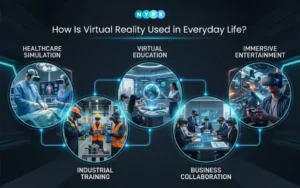
- VR Training in High-Risk Industries
VR is widely used for professional training, especially in jobs where mistakes can be risky. For example, companies like Boeing and several airline training centers use VR flight simulators to help pilots practice emergencies safely before flying real aircraft.
Even Walmart has used VR to train employees for busy shopping events and customer service situations.
- How do schools and universities use VR?
Schools and universities are also bringing VR into classrooms. For example, some students use Google Expeditions to take virtual field trips to places like the Great Wall of China or outer space without leaving the classroom.
Medical students at certain universities also use VR to study human anatomy in 3D instead of only learning from textbooks.
- Virtual Reality in Modern Healthcare
Hospitals and healthcare centers are using VR in different ways. Surgeons at hospitals like the Cleveland Clinic have used VR tools to plan complex surgeries before operating on patients.
VR is also being used in therapy. Some doctors use it to help patients manage anxiety, fear of heights, or even pain during recovery treatments.
- How Are Businesses Using VR Technology?
Companies are using VR to improve remote work and product design. For example, Meta has developed virtual meeting spaces where teams can work together in digital offices.
Car companies like Ford and BMW also use VR to test vehicle designs before building physical models, which helps save both time and money.
- The Rise of Immersive VR Entertainment
Gaming remains one of the biggest uses of VR. Devices like the PlayStation VR and Meta Quest allow players to fully step inside games instead of simply controlling them from a screen.
Beyond gaming, artists and music companies have also started hosting virtual concerts where fans can attend through VR headsets from home. These real-life examples show how virtual reality is slowly becoming part of daily life across different industries, not just entertainment.
Why Is Virtual Reality Growing So Quickly?
Virtual reality is growing rapidly because it offers practical benefits across many industries, not just entertainment. Businesses, schools, hospitals, and organizations are using VR to improve training, communication, learning, and customer experiences in more interactive and cost-effective ways. As VR technology becomes more affordable and advanced, more industries are investing in immersive experiences to improve productivity and engagement. The advantages of virtual reality extend well beyond entertainment.
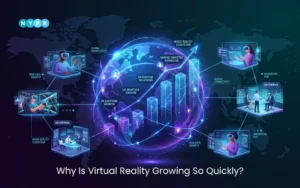
Here is why businesses and institutions around the world are investing in VR:
- Safe Learning Environment: Trainees can make mistakes in VR without real-world consequences. Surgeons, pilots, and firefighters can practice dangerous scenarios repeatedly, building muscle memory and confidence.
- Improved Retention: Studies show people retain 75% of what they learn through doing (vs. 5–10% from lectures). VR’s experiential nature dramatically improves knowledge retention.
- Cost Savings Over Time: While initial hardware costs can be significant, VR reduces long-term training expenditure, eliminating travel, physical equipment, and instructor hours.
- Global Accessibility: A student in rural India can experience the same world-class VR lesson as a student in New York. VR democratizes access to premium education and experiences.
- Empathy & Perspective: VR can place users in the experiences of others, such as a person with a disability, a refugee, or a patient, building empathy in ways no other medium can.
- Therapeutic Applications: VR-based exposure therapy has shown measurable success in treating anxiety, phobias, and PTSD, offering a controlled and adjustable therapeutic environment.
- Business Productivity: Around 51% of businesses are either using VR or planning to, with 34% citing employee learning and development as the top use case.
Top Virtual Reality Trends Transforming Technology in 2026
Virtual reality is evolving faster than ever as more businesses, consumers, and technology companies invest in immersive digital experiences. Improvements in AI, 5G connectivity, mixed-reality devices, and standalone VR headsets are helping VR become more accessible and practical for everyday use. From gaming and education to healthcare and enterprise collaboration, the industry is seeing rapid growth across multiple sectors.
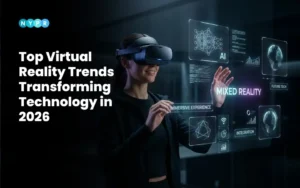
To understand the scale of VR’s growth, here are the most important data points shaping the industry right now:
- According to Fortune Business Insights, the global virtual reality market is expected to grow from $26.71 billion in 2026 to nearly $171.33 billion by 2034, showing massive long-term industry growth.
- IDC predicts an 87% year-over-year increase in VR and mixed reality headset shipments in 2026 as immersive devices become more mainstream.
- More than171 million people worldwide actively use VR, with the US market expected to reach 84.3 million users by 2026.
- Gen Z and Millennials account for nearly 76% of global VR users, making younger audiences the biggest drivers of VR adoption.
- The average SteamVR user now spends around52 minutes per session, reflecting stronger engagement and more advanced VR experiences.
- In early 2025,Meta controlled 50.8% of the global AR/VR headset market, maintaining its leadership position in immersive technology.
- North America currently holds around 35–37% of the global VR market share, while the Asia-Pacific region is projected to grow at a23.49% CAGR through 2031, making it the fastest-growing VR market worldwide.
Why Virtual Reality Still Faces Major Adoption Challenges in 2026
Despite the rapid growth of virtual reality technology, several challenges still prevent VR from becoming fully mainstream. While modern VR headsets are becoming more advanced and accessible, many users and businesses still face concerns related to cost, comfort, content quality, and long-term usability. These limitations continue slowing mass adoption, especially for casual users and smaller organizations.
As the VR industry grows, developers and technology companies are actively working to solve these problems through lighter headsets, better displays, AI-powered experiences, and more affordable devices. However, these challenges remain some of the biggest obstacles shaping the future of immersive technology.
- High Hardware Costs: Premium VR headsets can still cost anywhere from $399 to $3,499, making advanced VR technology expensive for many consumers, students, and small businesses.
- Limited High-Quality VR Content: Many potential users feel there are still not enough high-quality VR games, apps, educational experiences, and business tools available for long-term daily use.
- Motion Sickness and User Comfort: Some users experience dizziness, nausea, or motion sickness during VR sessions, especially when frame rates, movement systems, or tracking are not optimized properly.
- Physical Discomfort During Long Sessions: Wearing VR headsets for extended periods can cause eye strain, neck discomfort, fatigue, and overheating, particularly with heavier devices.
- Space and Accessibility Limitations: Fully immersive VR experiences often require open physical space and strong internet or hardware support, which may not be available to every user.
- Privacy and Data Concerns: Modern VR systems collect large amounts of motion, eye-tracking, and behavioral data, raising growing concerns around user privacy and digital security.
Although these challenges still exist, ongoing advancements in AI, hardware optimization, wireless technology, and mixed reality systems are helping make virtual reality safer, smarter, and more accessible for future users.
Where Virtual Reality Is Headed Next
Virtual reality has come a long way from the pixelated, bulky experiments of the 1990s. Today, it is a multi-billion-dollar industry reshaping how we learn, work, heal, and connect. With powerful new hardware arriving in 2026, from Samsung and Google’s Android XR platform to Apple’s M5-powered Vision Pro and Qualcomm’s sub-$400 professional headsets, the technology is becoming faster, lighter, cheaper, and smarter.
As 5G networks expand globally and AI-driven experiences become the norm, VR is poised to shift from a novelty to a necessity. Whether you are a student in Mumbai, a surgeon in Berlin, or an engineer in Tokyo, virtual reality is already part of your world, and it is only going to get more immersive.
Frequently Asked Questions (FAQ)
How does virtual reality work?
Virtual reality works using a combination of VR headsets, motion sensors, spatial audio, and software-generated 3D environments. The system tracks a user’s movements and updates the virtual world instantly to create an immersive experience.
What are some real-life examples of virtual reality?
Some common virtual reality examples include VR gaming, virtual classrooms, medical training simulations, virtual property tours, fitness apps, and immersive travel experiences. Many businesses also use VR for employee training and remote collaboration.
What are the advantages of virtual reality?
The main advantages of virtual reality include better learning experiences, safer training simulations, improved engagement, remote collaboration, and more interactive entertainment. VR is also helping industries like healthcare, education, and engineering improve training and visualization.
Is virtual reality only used for gaming?
No, virtual reality is no longer limited to gaming. In 2026, VR is widely used in healthcare, education, business, fitness, retail, architecture, tourism, and workplace collaboration. Many industries now use immersive technology for training, communication, and interactive experiences.













Leave a comment