

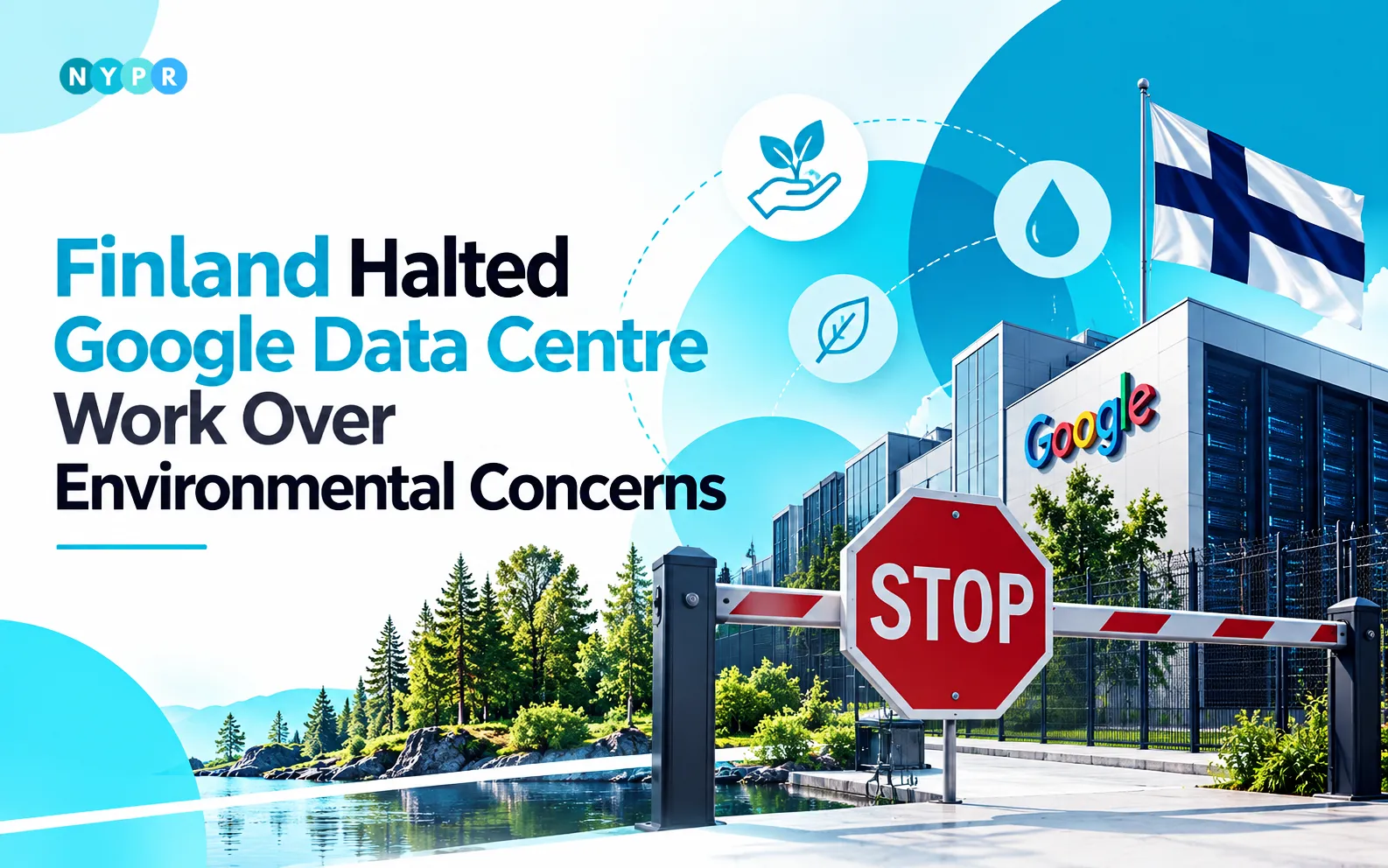
Google’s €13 billion expansion in Finland has hit a regulatory roadblock. Finnish authorities have ordered a halt to major site work at planned data centre sites in Muhos and Kajaani.The Finland Google data center projects are part of Google’s biggest investment in Europe. The company announced the plan on September 9. It said the sites would help meet demand for Search, Maps, and Gemini.
On October 6, Finland’s Licensing and Supervision Authority, or LVV, told Tuike Finland to stop the affected site work. The order covers activities that significantly change the land. The company must respond by October 14. The affected work must stop by October 23.
The dispute began after work started at the sites. The required environmental assessment was not yet complete. LVV said crews had removed trees and topsoil. They also built roads and storage areas and changed drainage structures. Reports said about 330 hectares were cleared in Muhos and nearly 200 hectares in Kajaani. The assessment process is meant to examine how major projects may affect land and nature before large changes are made.
Four Signals From the Data Centre Dispute:
- AI growth is now a land issue: More computing power needs large sites, roads and power systems.
- Power is only part of the plan: Google’s Finland strategy also includes nuclear power, renewable energy, and battery storage.
- Big investment does not remove checks: The €13 billion plan still has to meet Finnish rules.
- The wider project is still active: The order targets Muhos and Kajaani. It does not cancel Google’s full Finland plan.
Google has had a major presence in Finland for about 15 years. Its Hamina data center was created by converting a former paper mill. The latest plan covers Hamina, Kajaani, Muhos and Vaala. Google said the 2027 and 2028 build-out is expected to support more than 37,000 jobs and add an average of €3.6 billion a year to Finland’s economy. Google and Fortum also signed a 22-year power deal linked to the Loviisa nuclear plant.
Google’s Finland Timeline:
2009: Google opened its Hamina data center.
September 9, 2026: Google announced the €13 billion expansion.
October 6: Finnish authorities ordered the affected work to stop.
October 14: Tuike Finland must respond.
October 23: The suspension deadline applies.
The dispute shows that the AI boom has a physical side. Data centers need more than chips and servers. They need land, roads, power and regulatory approval. Finland has become an important location for data center projects. The Muhos and Kajaani case shows that fast growth still has to follow local rules.
Google said it understands the concerns and admitted it had fallen short of its own standards. The company told the BBC that it would follow the authority’s guidance. It also pointed to plans to plant trees across 130 hectares at Muhos.
Tuike Finland faces the October 14 response deadline and the October 23 suspension deadline. Authorities have warned that enforcement action and a fine are possible if the order is not followed.
Finland’s Minister of the Environment and Climate, Sari Multala, said Google’s projects will likely face delays because of the problems with the environmental assessments. Google and Tuike Finland must now complete the assessment process before the affected work can move ahead. For Finland, the case is a test of how quickly it can expand AI infrastructure while meeting environmental rules.
Authors note:
This story shows how the AI infrastructure race is facing new limits beyond technology and investment. The New York Press Release view is that Google’s Finland expansion highlights a wider challenge. Data center growth must move forward while meeting environmental responsibilities.
















Leave a comment