

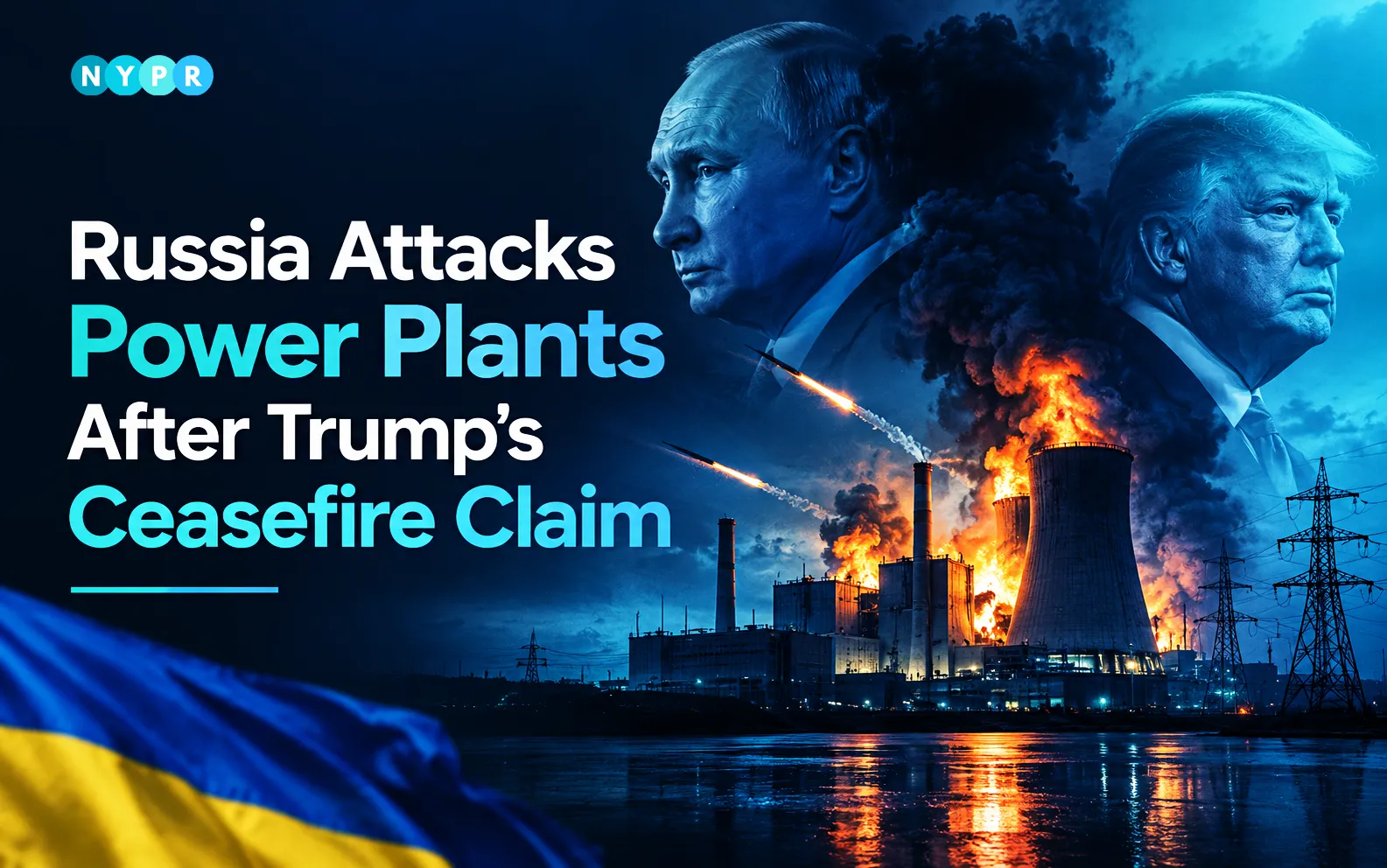
A ceasefire should bring relief, but fresh strikes have raised doubts about Donald Trump’s announcement. On October 11, he said Russia and Ukraine had agreed to stop attacks on energy facilities. Reports of Russian attacks on Ukraine’s power plants have raised fresh concerns. The strikes threaten electricity supplies and add uncertainty to global fuel markets.
Trump gave a few details. He did not say how long the truce would last or how violations would be checked. Russia had not publicly confirmed it.
Ukrainian President Volodymyr Zelensky initially said the announcement was “news to him.” He later said Ukraine was ready to stop attacking Russian energy facilities if Moscow did the same.
Zelensky reported further strikes, including an attack on a power plant in Kharkiv. Officials also reported blackouts in Izyum after damage to electricity networks. In Zhytomyr, attacks targeted energy and railway infrastructure.
Three Signals That Will Test the Energy Truce:
- Russia’s response: A public commitment from Moscow would show whether both sides accept the same terms. It would also clarify which facilities the proposed truce covers.
- Ukraine’s power supply: Further damage or blackouts would show whether energy facilities remain at risk. They would also indicate whether households face more disruption as winter approaches.
- Fuel-market evidence: Watch oil prices and diesel deliveries. These will show whether the deal increases fuel supplies or only changes market expectations.
The latest Ukraine energy infrastructure strikes affect homes, hospitals, transport, and businesses. Damage to power plants can interrupt services, raise repair costs, and pressure Ukraine’s energy system before winter.
Oil markets also reacted. In early trading on Monday, Brent crude fell 1.47% to $103.18 a barrel by 01:54 GMT, while US West Texas Intermediate fell 1.68% to $90.31. Traders were weighing the proposed truce and the prospect of more Russian diesel supplies.
The price move does not prove the truce is working or extra fuel has reached buyers. Middle East tensions and other supply risks also affect crude prices. The key question is whether supplies become more reliable for businesses and consumers.
Since Russia’s full-scale invasion began in February 2022, energy sites have been frequent targets. Russian attacks have damaged Ukraine’s power network, while Ukraine has hit Russian refineries to reduce Moscow’s ability to fund the war. Civilians face blackouts and disrupted services.
Trump’s proposal also follows his push for more Russian diesel supplies to US and global markets. Critics say the sales may increase Moscow’s wartime revenue. The proposal is harder to assess because fighting, energy trade, and diplomacy are closely linked. Clear evidence that both sides are following the ceasefire is still needed.
BBC has reported further strikes after Trump’s ceasefire announcement. These reports have raised doubts about whether the proposed truce will hold. The next test is whether Russia confirms the terms and attacks on energy facilities stop. Clear commitments and reliable monitoring will help show whether the arrangement is working. Until then, the ceasefire remains unproven.
Author’s Note:
New York Press Release examines the continued attacks on Ukraine’s energy infrastructure. It also explores how these strikes affect Trump’s efforts to secure a ceasefire. These attacks are also creating uncertainty in global fuel markets. In our view, a lasting truce will require clear terms, mutual commitment, and evidence that both sides are following the agreement.
















Leave a comment