

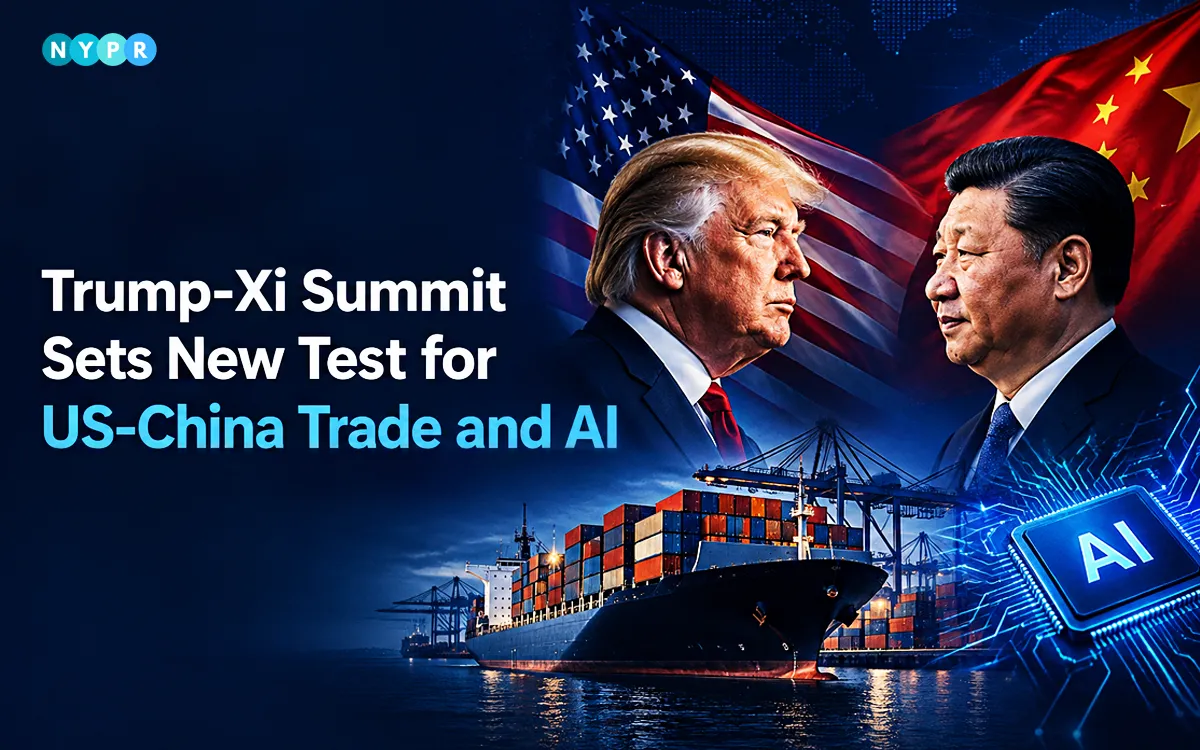
Washington gave Chinese President Xi Jinping a high-profile welcome on September 24. But for businesses and investors, the photo opportunity mattered less. The bigger question was whether the meeting changed the outlook for trade and technology.
US President Donald Trump and Xi met at the White House with trade, artificial intelligence, Taiwan and the war with Iran on the agenda. Both leaders used a warmer tone, yet the summit produced no broad deal on the disputes shaping US-China relations. The clearest economic result was the extension of the trade truce.
The US and China agreed to extend their trade truce by two months. The extension gives negotiators more time to address key trade issues. These include tariffs, Chinese purchases, rare-earth supplies, and technology rules. It does not settle those issues.
For companies, the message is simple. The next tariff deadline has moved, but planning is still difficult. A US manufacturer buying parts from China now has more time to review costs and suppliers. It still needs a backup plan if trade rules change later. The summit gave businesses four key signals on trade, AI, supply chains, and investment.
- Trade gets more time: The truce buys another negotiating window, rather than a lasting trade settlement.
- AI stays sensitive: Xi called for AI to remain under human control, while US controls on advanced technology remain part of the dispute.
- Supply chains still matter: Rare earths are widely used in electronics and vehicles. They are also important for several other industries.
- Money still crosses the divide: US banks are still helping Chinese technology companies raise money. At the same time, Chinese investors hold large positions in US semiconductor stocks.
The guest list included executives from Apple, Alphabet, OpenAI and Nvidia. Their presence showed how closely US-China policy is tied to the technology business.
Yet the leaders did not announce a major AI agreement. That leaves advanced chips, chip-making tools and access to computing power as key issues for companies in both markets. The financial links are also significant. US banks worked on $17.2 billion in Chinese tech deals in 2026. The figure shows that financial ties between the two countries remain active. Chinese investors also held more than $750 billion in US equities, based on US data.
That makes the relationship more complicated than a simple economic split. Companies may face tighter rules while capital and business ties remain active.
Taiwan was another major issue. China’s official readout said Xi urged Washington to oppose Taiwan independence. He also called for a cautious approach to the issue.Reuters reported that there was no immediate detailed White House readout of the exchange.
Xi also called for regular military dialogue and better crisis-prevention measures. For businesses, the concern is wider than diplomacy. A sharper US-China dispute would also affect shipping, technology and regional supply chains.
The summit has extended the talks, but it has not removed the main pressure points.
- Trade: Whether the longer truce leads to a wider agreement.
- Chips: Whether US export controls change.
- Supply chains: Whether rare-earth shipments stay steady.
- Markets: Whether the yuan, stocks and other assets react to new policy signals.
For businesses, the summit changed the timetable more than the underlying picture. Washington and Beijing now have more time to negotiate. But companies still face trade and technology rules that can change quickly.
Author’s Note: The Trump-Xi summit brought a friendly tone, but it did not solve the main issues between the US and China. The extended trade truce gives businesses more time to plan. Still, questions around AI, technology controls, and supply chains remain. TheNew York Press Release provides useful context on these US-China developments. It also looks at how they may affect businesses and markets.
















Leave a comment