

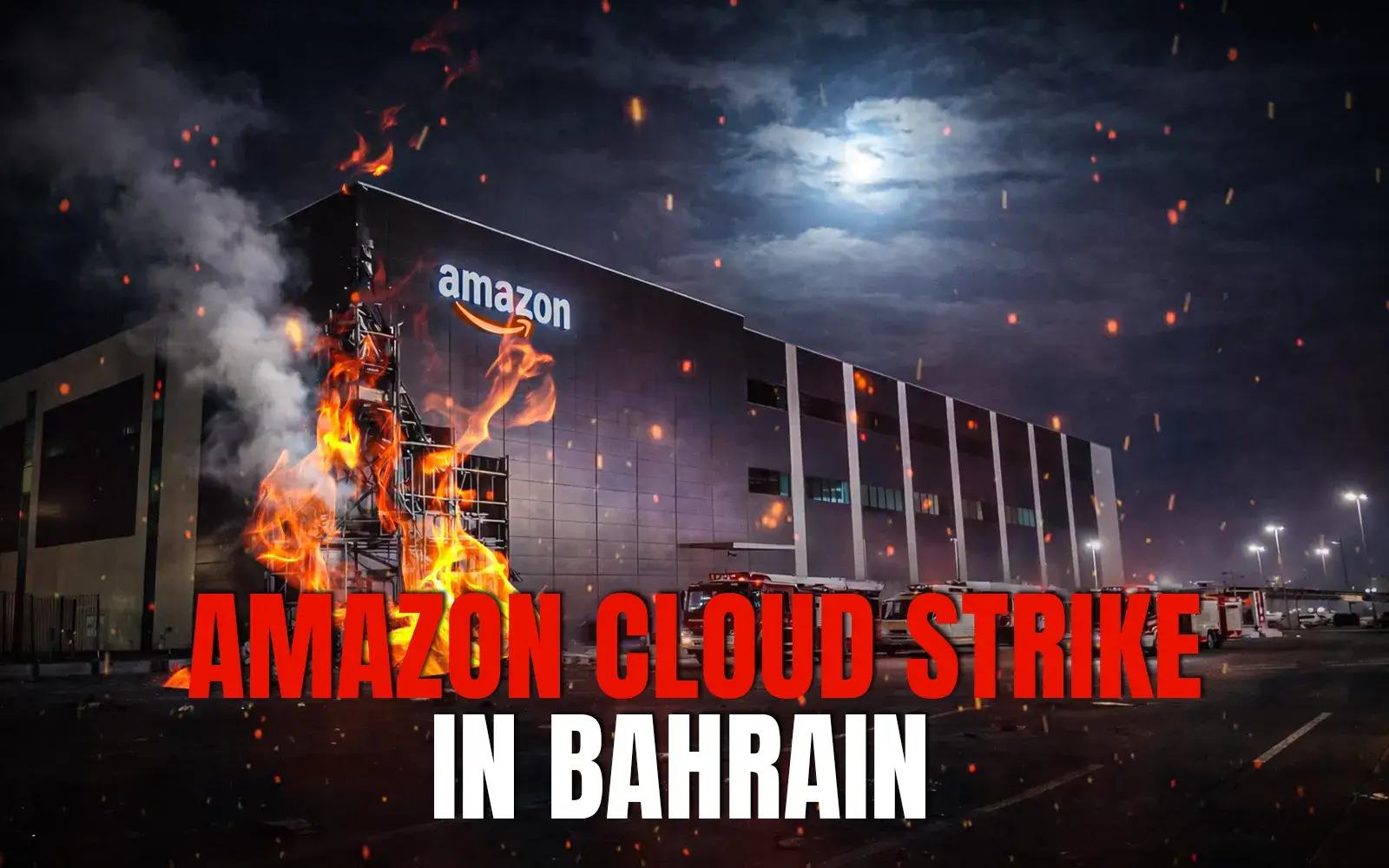
A cloud facility operated by Amazon in Bahrain has been damaged during a reported strike linked to Iran on April 1, 2026 (Wednesday). The impact appears limited, but the incident has drawn global attention. It shows how quickly physical conflict can reach digital infrastructure.
There are no confirmed large-scale outages so far. Still, companies using nearby systems are monitoring the situation closely. The event adds a new layer of concern for businesses that depend on stable cloud networks across regions.
Sequence of the Incident
The strike took place during a period of rising tension in the region. One of the affected zones included infrastructure tied to Amazon’s cloud operations.
Initial assessments suggest that part of the facility sustained damage. However, core systems may have remained functional due to built-in safeguards.
Modern data centers are designed with backup power, redundancy, and failover systems. These features help limit service disruption even when physical damage occurs.
Engineers are continuing to inspect the site. The full extent of the impact is still being evaluated, including whether any hardware or storage systems were affected. While such facilities are built for resilience, they still depend on stable surroundings. This incident shows that even well-protected systems are exposed to external risks.
Broader Industry Relevance
The Amazon Cloud Bahrain damage brings a real-world dimension to cloud computing. Behind every digital service is a physical location that can be affected by events on the ground.
An Iranian drone strike on an Amazon data center scenario highlights how geopolitical tensions can spill into the tech sector without warning.
Even if systems stay online, the risk perception changes. Businesses may begin to question how safe certain regions are for hosting critical data.
An Amazon cloud infrastructure attack, whether direct or indirect, also raises concerns about how disruptions can spread. A localized issue can affect services across borders if systems are closely linked.
For global companies, this could lead to a stronger push toward multi-region setups and backup planning.
Scope of Impact
The impact reaches businesses, users, and developers who depend on regional cloud systems for daily operations. While major disruptions have not been confirmed, even limited damage can affect performance and response times. The situation highlights how closely global digital services are tied to specific physical locations.
1. Business-Level Exposure
Companies relying on cloud services in the region may experience slower response times or brief service instability.
Firms with distributed systems across multiple regions are better prepared. Those with concentrated setups may face a higher risk during such incidents. This could also influence future decisions on where to store data and how to manage regional dependencies.
2. User Experience Impact
For most users, the impact may be minimal or not immediately visible. However, services like online payments, video streaming, or app performance could see minor slowdowns if backend systems are affected.
Even short interruptions can affect user trust, especially for services that depend on constant uptime.
3. Developer-Side Challenges
Developers working with regional cloud zones may need to shift workloads quickly.
This process can take time and may increase operational costs. It can also lead to temporary performance issues while systems adjust. The situation highlights the need for flexible architectures that can handle sudden changes.
Emerging Developments Ahead
The technical teams will keep monitoring systems while they work on stabilizing operations. The cloud providers will assess their infrastructure distribution across different regions with special focus on areas that face geopolitical risks.
Some companies might speed up their plans to distribute workloads because they want to avoid dependency on one location.
The questions still exist without resolution. The facility remains uncertain about its status as either a direct target or an area impacted by nearby events. The long-term effect on infrastructure planning will likely unfold over time.
A Changing Infrastructure Reality
This incident shows that the cloud is not as distant from real-world events as it may seem. Digital services depend on physical systems, and those systems exist within complex global environments.
For now, operations appear stable. But the event serves as a clear signal that resilience in the cloud now goes beyond technology; it also depends on where that technology lives.










Leave a comment