

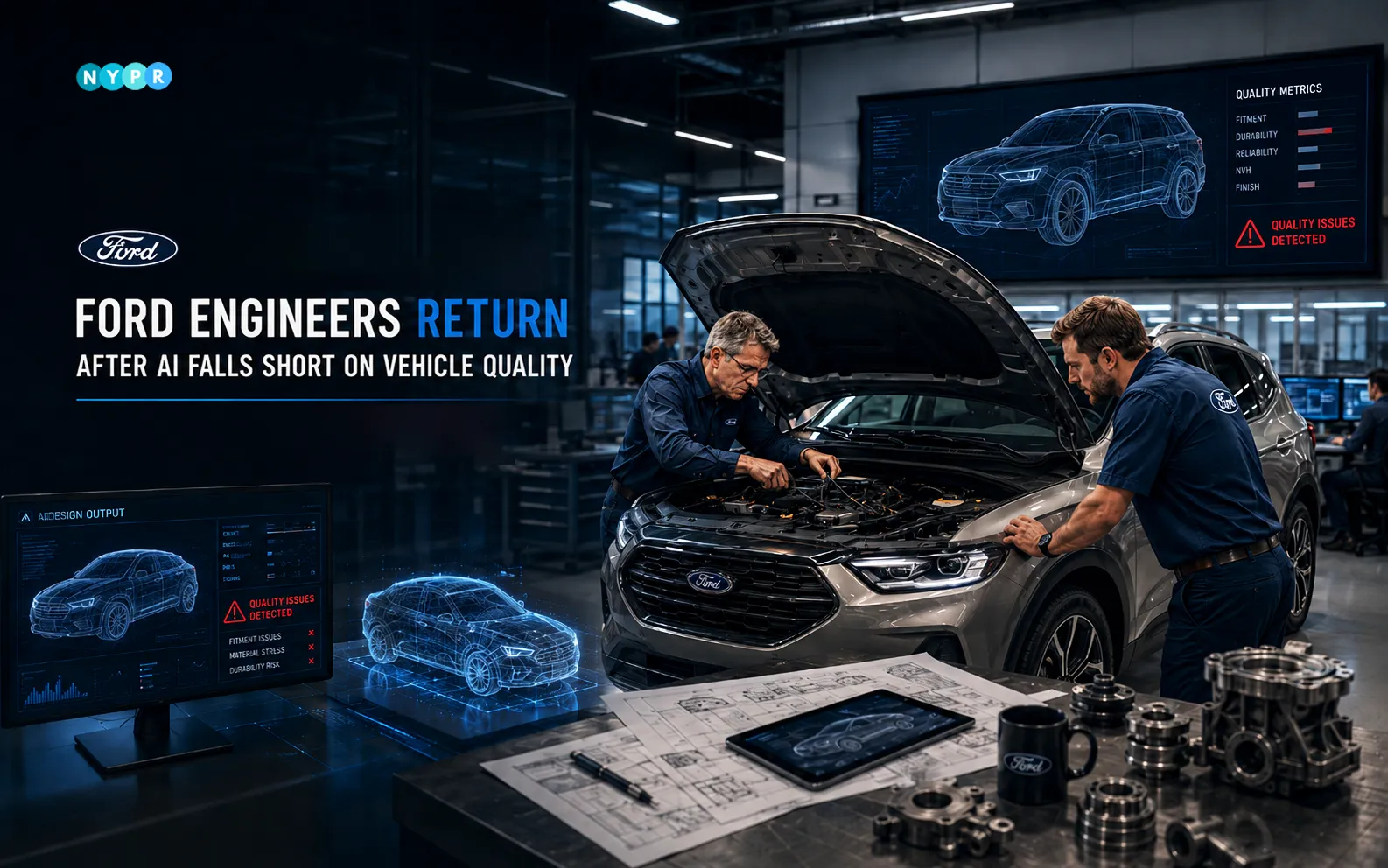
Ford engineers are returning to the factory floor after the automaker found that its AI-driven quality systems could not consistently deliver the vehicle quality it expected. The company is now blending decades of engineering knowledge with automotive factory AI, aiming to catch production issues earlier and improve overall product reliability instead of relying on automation alone.
Ford Chief Operating Officer Kumar Galhotra said the company had increasingly depended on automated inspection systems but found that they were not delivering the desired results. To strengthen quality checks, Ford brought back technical specialists, often referred to as “gray beard” engineers, who can identify potential problems before components reach the assembly line.
Many of those returning previously worked at Ford, while others came from long-time supplier partners. Their practical knowledge helps uncover complex design and production issues that software can still miss, particularly when defects are uncommon or fall outside the data used to train AI systems.
Charles Poon, Ford’s Vice President of Vehicle Hardware Engineering, said the company initially believed artificial intelligence could produce high-quality designs simply by processing engineering requirements. Instead, the Ford AI project fails to consistently deliver the expected results without experienced professionals validating designs and production decisions.
Key Takeaways:
- Ford rehired 350 veteran specialists to strengthen production quality.
- Technical experts now identify potential defects before manufacturing begins.
- The company is using its expertise to mentor younger teams and improve AI models.
- Ford says the new approach has helped reduce warranty and recall costs while improving product quality.
Ford’s experience reflects a broader shift across the manufacturing sector. AI is highly effective at processing large amounts of production data and identifying recurring patterns, but it can still struggle with supplier variations, unusual defects, and engineering decisions that rely on practical experience. Rather than replacing skilled workers, manufacturers are increasingly using AI to support technical teams.
The revised strategy is already producing measurable results. Ford says stronger engineering oversight has contributed hundreds of millions of dollars in lower warranty and recall expenses. The automaker also secured the highest ranking among mainstream brands in the latest JD Power Initial Quality Study, highlighting improvements in overall vehicle reliability.
Ford’s decision reflects a wider trend as manufacturers continue investing in automotive factory AI while recognizing the importance of experienced professionals in design validation, supplier reviews, and final quality checks. Instead of viewing AI as a replacement for people, companies are increasingly treating it as a tool that enhances engineering expertise.
As AI adoption continues to grow, Ford’s approach suggests the future of manufacturing will depend on collaboration rather than replacement. By combining Ford engineers with intelligent automation, the company hopes to build more reliable vehicles while creating a smarter and more resilient production process.

















Leave a comment